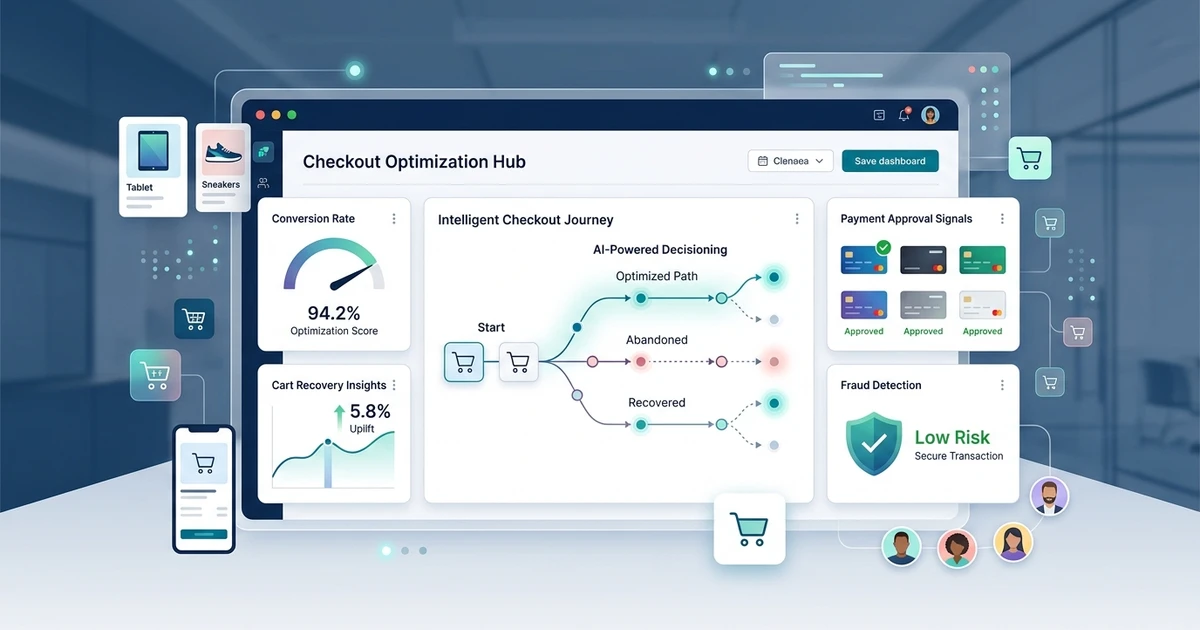
AI lead generation is no longer a future idea for digital marketing teams. It is now a practical growth engine for businesses that need better lead quality, stronger media performance, and clearer ROI. Many CEOs, CTOs, IT Directors, and business owners ask the same question: what are the best ways to use AI without adding complexity? This guide explains practical methods to use intelligent automation, data driven strategy, and marketing optimization across search, paid ads, social media, maps, CRM, and reporting.
Key Takeaways
- AI lead generation works best when strategy, execution, optimization, and lead tracking connect in one digital marketing workflow.
- Businesses can improve lead generation by using automation for SEO, paid media, social media, maps, and AI search optimization.
- The strongest ROI comes from better targeting, faster execution, and performance analysis instead of isolated tools.
Why AI Lead Generation Matters for Digital Marketing
AI lead generation helps businesses move from manual campaign execution to intelligent marketing optimization, where every channel supports measurable growth. It connects audience data, campaign performance, CRM signals, and ROI reporting so decision makers can focus on qualified leads instead of isolated traffic, clicks, or disconnected digital activity across complex teams.
Many businesses still manage digital marketing in disconnected pieces. One tool manages ads, another handles social media, another tracks website leads, and another stores customer conversations. This creates reporting gaps, duplicated work, and wasted media spend.
AI solves this by connecting customer data, campaign performance, and lead signals into one decision system. For example, a business can identify which search keywords bring qualified leads, which landing pages convert better, and which media campaigns waste budget. Leadmetrics supports this connected approach through AI powered software that helps teams create, execute, automate, and optimize marketing from a single platform.
The value is not just speed. The real advantage is better prioritization. Instead of guessing what to publish or where to spend, teams can use data driven recommendations to focus on the channels most likely to generate qualified leads.
A strong strategy starts with knowing where customers search, what they compare, and which messages influence action. AI can process this information faster than manual research. If your team wants a deeper framework, read this Marketing Optimization Guide for Better Lead Generation. It explains how optimization links strategy with measurable business outcomes.
The productivity case is also becoming stronger. McKinsey estimates that generative AI could add between $2.6 trillion and $4.4 trillion in annual economic value across use cases. Marketing and sales are among the functions with major potential because teams can use AI to improve analysis, personalization, content workflows, and lead follow up.
Best Ways to Use AI for Lead Generation
AI lead generation should improve how teams identify opportunities, produce content, manage campaigns, qualify prospects, and measure outcomes. When applied with reliable data and clear goals, it reduces repetitive work, strengthens digital visibility, and helps businesses focus on activities that generate revenue instead of activity reports or vanity metrics alone.
Lead generation depends on three things: visibility, conversion, and follow up. AI can improve each stage when teams use it with clear goals and reliable data.
Here are practical ways businesses can apply it:
- Improve search visibility with intent based keyword planning.
- Optimize paid ads by reducing wasted spend.
- Generate social media content ideas based on audience behavior.
- Improve Google Business Profile and maps visibility.
- Personalize landing pages for different customer segments.
- Score leads based on engagement and conversion signals.
- Track campaign ROI through connected performance reports.
These methods work best when they share data. If paid ads, SEO, social media, and CRM data stay separate, decision makers cannot see the full journey. A unified platform helps connect the dots between marketing activity and actual lead generation.
For businesses comparing tools and workflows, the Leads Growth Guide for AI Digital Marketing Success is a useful supporting resource.
AI also improves CRM automation. Not every inquiry has the same value. Some visitors are researching. Others are ready to buy. Manual lead review often delays response and reduces conversion potential.
AI can assign priority based on signals such as page visits, form submissions, campaign source, repeat engagement, and location. For example, a prospect who visits a service page, reads a guide, and requests a consultation should receive faster follow up than a casual blog reader.
Speed matters. A widely cited Harvard Business Review study found that companies contacting leads within one hour were nearly seven times more likely to have meaningful conversations with decision makers than those that waited longer. This is why CRM automation, lead scoring, and instant routing can directly affect conversion quality.
How AI Improves SEO, Maps, and AI Search Optimization
AI improves digital visibility by helping businesses optimize content, service pages, local listings, and machine readable assets for modern discovery platforms. This includes Google, Bing, maps, ChatGPT, Gemini, Meta AI, and other generative answer engines that influence customer decisions before they visit a website, request a consultation, or contact sales.
Traditional SEO still matters, but search behavior is changing. Customers now discover businesses through search engines, map results, social platforms, and generative AI tools. This means businesses need broader visibility across the full discovery journey.
AI driven SEO can help teams identify content gaps, improve page relevance, create better topic clusters, and monitor rankings. Maps optimization can improve local discovery for clinics, restaurants, real estate offices, retail stores, and service businesses. AI search optimization helps brands appear in answer engines where customers ask direct questions.
Leadmetrics offers dedicated capabilities for AI Search Optimization, supporting businesses that want visibility beyond standard keyword rankings.
Authoritative guidance from Google Search Central reinforces the importance of helpful, accessible, well structured content. That principle applies across both classic search and AI assisted discovery.
Many business owners ask, “Why does my company not appear when customers ask ChatGPT or Gemini for recommendations?” The answer usually involves content clarity, authority signals, and structured coverage.
AI search tools prefer content that is easy to understand, specific, and aligned with user questions. A vague service page may not perform well. A detailed guide that explains services, locations, industries, use cases, and outcomes has a better chance of being referenced.
This is why generative engine optimization is becoming important. Businesses should create content that answers real customer questions, not just keyword variations.
Building a Unified AI Marketing Workflow
A unified AI marketing workflow connects content planning, campaign execution, publishing, lead capture, CRM tracking, and ROI reporting. It gives decision makers one view of performance and helps teams improve every stage of customer acquisition, from digital discovery to qualified lead generation, sales follow up, and budget optimization decisions faster.
The best results come when businesses stop treating marketing as separate tasks. SEO, paid ads, social media, maps, AI search, and CRM should work together.
A unified workflow can look like this:
- Identify customer demand through search and campaign data.
- Create content and landing pages around high intent topics.
- Distribute content through social media and paid campaigns.
- Capture leads through forms, calls, and consultation requests.
- Track interactions in CRM.
- Measure ROI by channel, campaign, and lead quality.
- Use insights to optimize the next campaign cycle.
This workflow improves accountability. A CEO can see which channels produce revenue opportunities. A CTO can evaluate system integration. A marketing head can optimize spend. A business owner can understand whether digital marketing activity is turning into qualified leads.
It also improves campaign testing. A common mistake is judging campaigns only by impressions or clicks. These metrics show activity, not business impact. The better question is: which campaign produced leads that sales teams can actually use?
AI can compare creatives, audiences, keywords, landing pages, and conversion signals across channels. It can also identify budget leakage. For example, a business may find that mobile traffic converts well on maps but poorly on landing pages. That insight can guide changes in design, copy, and targeting.
This approach supports cost savings because teams stop spending on underperforming segments sooner. It also helps teams invest more confidently in the channels that produce stronger lead generation outcomes. For a broader execution checklist, review these Digital Marketing Best Practices for Lead Generation.
Common Mistakes to Avoid With AI
AI delivers value only when businesses use it with clear goals, clean data, and connected execution. Poor prompts, disconnected tools, weak tracking, and generic content can reduce impact, even when the technology is powerful and the team has strong marketing experience across digital channels, media planning, and lead management workflows.
Many companies start with tools before defining outcomes. This creates confusion and makes performance harder to measure.
Avoid these common mistakes:
- Using AI only for content generation without strategy.
- Ignoring lead quality and tracking only traffic.
- Running paid campaigns without conversion analysis.
- Publishing generic content that does not answer buyer questions.
- Treating AI search optimization as optional.
- Keeping CRM data separate from marketing reports.
- Measuring activity instead of ROI.
The solution is simple but disciplined. Start with business goals. Define what a qualified lead means. Connect digital channels. Review performance regularly. Then use AI to improve each step.
Clean data is especially important. AI recommendations are only as strong as the signals behind them. If call tracking, form data, CRM stages, ad spend, and landing page conversions are incomplete, the system may optimize for the wrong outcomes. Reliable reporting helps decision makers identify which campaigns create real pipeline, not just traffic spikes.
Conclusion
AI lead generation works best when strategy, execution, optimization, and reporting operate as one connected system. Businesses that combine search visibility, paid media control, maps optimization, social media consistency, CRM automation, and ROI analysis can turn digital marketing activity into a more predictable source of qualified leads and revenue growth.
AI lead generation gives businesses a better way to manage digital marketing, media optimization, automation, CRM, and ROI analysis. The best approach is not to use isolated tools, but to connect strategy, execution, lead tracking, and reporting. Businesses that combine search visibility, paid ads control, social media consistency, maps optimization, and AI search readiness can build a stronger growth system. If you want to improve marketing operations with AI powered software, book a demo with Leadmetrics and explore a smarter way to generate qualified leads.
Leave a Reply