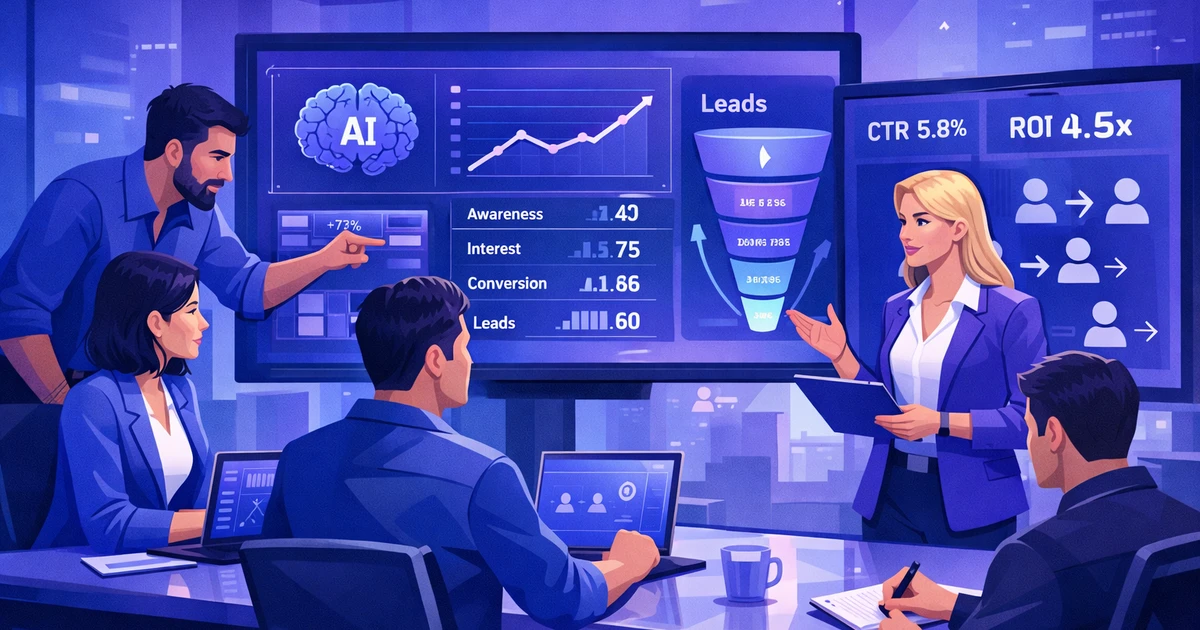
AI powered digital marketing is no longer a future concept for growth teams. It is now a practical way to test campaigns faster, improve lead generation, and make better decisions with data analytics. Many business owners still run marketing based on guesswork, then wonder why results fluctuate. This guide explains how to build a simple testing system that supports optimization, improves efficiency, and delivers high quality results through tailor made strategy. For a deeper planning framework, start with this marketing test guide for AI powered growth teams.
Key Takeaways fgdgdfgdfgdfg dfgfd gggg
asdasdad asd asd asda
- AI powered testing helps businesses replace assumptions with measurable insights.
- Strong data analytics improves lead generation by showing what actually drives action.
- A tailor made testing framework supports better optimization across search, social, ads, and content.
Why AI Powered Digital Marketing Testing Matters
AI powered digital marketing testing matters because it turns campaign activity into measurable learning. Instead of guessing which message, channel, or offer works, teams can use data analytics to identify patterns, reduce wasted spend, and improve lead generation with a disciplined optimization process that supports high quality results over time.
Marketing without testing creates noise. You may publish content, run ads, and post on social media, but still not know which activity drives qualified leads. Testing gives every campaign a clear purpose.
AI powered platforms improve this process by spotting trends across channels. For example, an ad campaign may generate clicks, but the landing page may fail to convert. Data analytics can show where users drop off, which message works best, and which audience segment deserves more budget.
The goal is not to test everything at once. The goal is to test the right variable, learn quickly, then apply optimization across the next campaign.
According to Google Think with Google, brands that use measurement and experimentation can make smarter decisions across the customer journey. That matters because modern buyers rarely convert after one touchpoint.
How AI Powered Digital Marketing Connects Signals
AI powered digital marketing connects signals from search, paid ads, social engagement, landing pages, and customer actions. This gives teams a clearer view of what motivates buyers. When those signals are measured together, marketers can make faster decisions, improve lead generation, and create campaigns that feel more relevant to each audience.
Search tells you what people want. Ads show which messages earn immediate action. Social media reveals what captures attention and builds trust. Together, these channels create a complete growth picture.
An AI powered workflow can connect these insights. Search data may show that customers ask about automation costs. Paid ads can then test cost focused messages. Social posts can answer common objections. Landing pages can include proof points that support high quality results.
Building a Tailor Made Testing Framework
A tailor made testing framework starts with a clear business goal, then connects each campaign test to one measurable outcome. This keeps teams focused, prevents random experiments, and helps marketing professionals understand which changes support better lead generation, stronger engagement, and long term optimization across every active channel.
A strong framework begins with one question. What do we need to improve first?
For many businesses, the answer is lead generation. For others, it may be cost per lead, search visibility, social engagement, or demo bookings. Once the goal is clear, choose one test variable.
Common variables include:
- Headline message
- Landing page layout
- Call to action text
- Audience segment
- Ad creative
- Email subject line
- Search intent focus
- Offer type
Do not test several major changes at once. If performance improves, you will not know which change caused it. A better approach is to run focused experiments with clear success criteria.
For example, a company may test two landing page headlines. One headline focuses on cost savings. The other focuses on faster growth. If the growth headline drives more form submissions, the team can apply that insight to ads, emails, and website copy.
Leadmetrics V3 supports this mindset through tailor made digital marketing strategies that connect automation with business goals. The value comes from aligning AI powered execution with a clear strategy, not from automating random activity.
AI Powered Digital Marketing Test Variables
AI powered digital marketing works best when each test variable has a clear reason behind it. A headline test should connect to message clarity. A call to action test should connect to conversion intent. This simple discipline makes optimization easier and gives teams insights they can reuse across campaigns.
A good test begins with a hypothesis. For example, “If we focus the landing page headline on faster growth, more visitors will request a demo.” That statement gives the team a clear direction.
Then the team needs one success metric. Form submissions, qualified enquiries, booked calls, or cost per lead may all work. The right choice depends on the business goal. This prevents teams from celebrating clicks when the real goal is qualified lead generation.
Using Data Analytics for Lead Generation Optimization
Data analytics turns campaign activity into useful insight by showing which channels, messages, and user actions contribute to qualified leads. When teams analyze this information consistently, they can improve lead generation, reduce waste, and focus resources on the campaigns most likely to produce high quality results.
Data analytics should answer simple business questions. Which traffic source produces the best leads? Which page converts visitors into enquiries? Which audience needs more education before taking action?
Without this visibility, teams often reward the wrong metrics. A social campaign may look successful because it earns impressions. Yet it may produce few qualified leads. A search campaign may bring fewer visitors, but those visitors may convert at a higher rate.
Useful metrics include:
- Conversion rate
- Cost per lead
- Lead quality
- Form completion rate
- Time on page
- Assisted conversions
- Return on ad spend
- Search ranking movement
The best teams combine platform data with customer relationship data. This helps connect marketing activity to actual revenue potential. It also improves optimization because teams can identify not only what gets leads, but what gets valuable leads.
For deeper channel performance, businesses can review AI driven search engine optimization and connect search insights with content planning. Search data often reveals buyer intent earlier than paid campaigns.
Research from McKinsey has shown that advanced analytics can improve marketing and sales decision making. The lesson is clear. Better data creates better actions.
AI Powered Digital Marketing Metrics That Matter
AI powered digital marketing metrics should connect activity to business outcomes, not just campaign visibility. Impressions and clicks can be useful, but they rarely tell the full story. Teams should focus on conversion quality, lead source performance, and revenue potential to guide smarter optimization decisions.
The most useful metrics are the ones that help you decide what to do next. If one audience brings low cost leads but poor sales outcomes, more budget may not help. If another channel brings fewer but stronger leads, it may deserve more investment.
This is why lead quality matters. A campaign that produces ten qualified enquiries can be more valuable than one that produces one hundred weak contacts. Data analytics gives teams the evidence to choose better campaigns, not just bigger numbers.
Applying Tests Across Search, Ads, and Social
AI powered digital marketing works best when testing is applied across the full customer journey, not just one channel. Search, ads, and social all provide different signals, and combining those signals helps teams create stronger campaigns, improve optimization, and build a more consistent lead generation engine.
Search tells you what buyers are actively researching. Ads reveal which messages earn fast attention. Social media helps teams understand objections, interests, and trust signals. When these channels share learning, every campaign becomes stronger.
A simple cross channel testing model looks like this:
- Use search data to identify demand.
- Use ads to test offer and message speed.
- Use social media to build trust and education.
- Use landing pages to convert interest into leads.
- Use data analytics to improve each stage.
Businesses that want stronger paid performance can explore Google Ads optimization. Teams focused on visibility across modern discovery platforms can also review AI search optimization.
The key is consistency. AI powered systems work best when every campaign uses shared goals, shared data, and shared learning.
Common Mistakes and Your First AI Powered Marketing Test
Many teams fail to get high quality results because they test without a clear hypothesis, stop experiments too early, or measure only surface level activity. Better testing requires patience, clean data, and a disciplined process that connects each experiment to lead generation and business outcomes.
The most common mistake is testing too many changes at once. A new headline, new design, new offer, and new audience may seem exciting. But if results change, the team cannot identify the cause.
Another mistake is ending tests too quickly. Small sample sizes can create misleading conclusions. A campaign may perform well for two days, then decline once a wider audience sees it. Strong optimization needs enough data to support the decision.
Teams also rely too much on vanity metrics. Clicks, likes, and impressions matter only when they support the next business action. A useful test should connect to a meaningful outcome.
Avoid these mistakes:
- Testing without a clear goal
- Choosing weak success metrics
- Ignoring lead quality
- Changing campaigns too often
- Comparing different time periods unfairly
- Forgetting mobile user behavior
- Failing to document learning
Documentation is especially important. Every test should create knowledge the team can use later. Over time, this becomes a growth library. It helps new campaigns start stronger and reduces repeated mistakes.
If your current campaigns lack clarity, an AI marketing audit can help identify where data, targeting, and conversion paths need improvement.
Start with a campaign that already has traffic. Testing a page or ad with no activity will not produce useful insight. Then choose one improvement area.
Here is a simple starting plan:
- Pick one goal, such as more demo requests.
- Select one asset, such as a landing page.
- Choose one variable, such as the call to action.
- Set one metric, such as form submissions.
- Run the test until you have enough data.
- Review lead quality, not only volume.
- Apply the learning to the next campaign.
For example, a business may test “Book a demo” against “Get your growth audit.” The first option may appeal to buyers ready to speak. The second may attract people still exploring. Data analytics will show which phrase brings stronger leads.
This is how AI powered digital marketing becomes practical. It does not replace strategy. It strengthens strategy by making every decision more informed.
Conclusion
AI powered digital marketing gives business owners and marketing professionals a smarter way to test, learn, and grow. The strongest results come from clear goals, tailor made strategy, consistent data analytics, and disciplined optimization. Start small with one focused experiment, then use each result to improve lead generation across search, ads, social, and landing pages. When your team is ready to connect testing with campaign execution, you can book a demo with Leadmetrics and explore how AI powered optimization supports better growth decisions.
Leave a Reply