Digital marketing often looks healthy right before performance starts slipping. Leads are arriving, ads are spending, reports look acceptable, and the team says everything works fine. Yet hidden issues can quietly reduce qualified leads, ROI, and customer acquisition efficiency. This guide explains what business owners, CEOs, CTOs, and marketing leaders should review when things seem stable. You will learn how to inspect tracking, lead quality, automation, AI search visibility, content performance, and campaign optimization before small gaps become expensive growth problems. For a broader framework, review this marketing optimization guide for better lead generation.
Key Takeaways
- “Everything works fine” is not a marketing strategy. Strong digital marketing needs regular performance analysis, tracking checks, and conversion reviews.
- AI powered software can help businesses detect lead leakage, reduce wasted media spend, and improve optimization across channels.
- The best time to improve lead generation is before performance drops, not after the pipeline slows.
Why Digital Marketing Breaks Quietly
Digital marketing systems rarely fail all at once. More often, small tracking gaps, outdated content, weak landing pages, slow lead follow up, or poor campaign segmentation reduce performance over time. When teams only check surface metrics, they may miss the deeper issues affecting lead generation, media efficiency, and return on investment.
A business can receive leads and still lose revenue because the wrong leads are entering the pipeline. Paid campaigns may generate form fills, but sales teams may report poor intent. SEO traffic may grow, but conversion rates may stay flat. Social media may look active, but it may not influence qualified enquiries. This is why digital marketing must be checked as a connected system, not as separate channels.
Digital marketing warning signs leaders should not ignore
A useful first step is to review your full acquisition path. Ask where people discover you, what content they consume, where they convert, and how leads move into CRM. A complete digital marketing platform selection guide can help teams understand which platform capabilities matter when visibility, automation, and lead quality must work together.
Look for these early warning signs:
- Lead volume is stable, but sales acceptance is dropping.
- Ad spend is rising faster than qualified pipeline.
- Website traffic is growing, but enquiries are not.
- Reports show activity, but not clear ROI.
- Leads are delayed, duplicated, or missing inside CRM.
When leaders say everything works fine, the next question should be simple. Fine according to which metric?
Digital Marketing Metrics That Reveal Hidden Problems
Digital marketing performance should not be judged only by clicks, impressions, or total leads. Leaders need metrics that connect marketing activity to business outcomes. Cost per qualified lead, conversion rate, source quality, response time, and ROI show whether campaigns are producing real growth or only creating activity.
Surface metrics can create false confidence. A campaign with high clicks may still attract low intent visitors. A blog post may rank well but fail to move readers toward a lead form. A Google Business Profile may receive views, but weak local optimization can reduce calls and direction requests.
Strong performance analysis should include both channel metrics and pipeline metrics. For example, Google Ads should be reviewed against landing page conversion, CRM lead quality, and sales outcome. SEO should be reviewed against visibility, assisted conversions, and content relevance. Social media should be reviewed against engagement quality and referral traffic, not only likes.
According to Google Analytics documentation, event based measurement helps businesses understand meaningful user actions across websites and apps. This matters because modern digital marketing needs more than pageview tracking. It needs insight into form starts, call clicks, demo requests, content engagement, and lead source quality.
A practical review can include:
- Cost per lead and cost per qualified lead.
- Landing page conversion rate by campaign.
- Lead response time by source.
- Organic traffic split by intent.
- CRM status by marketing channel.
- Revenue or pipeline contribution by campaign.
Leadmetrics AI helps businesses connect digital marketing activity with lead generation and performance analysis. Instead of checking SEO, ads, maps, social media, AI search, and CRM in isolation, teams can use AI powered software to identify where optimization is needed most.
How AI Powered Software Improves Lead Generation
AI powered software strengthens lead generation by finding patterns that manual reviews often miss. It can compare channels, detect weak conversion paths, support marketing automation, assist content workflows, optimize paid media, and improve follow up. This helps teams save time while making decisions based on data rather than guesswork.
Traditional reporting tells you what happened. AI assisted optimization helps explain what to improve next. For example, if a landing page receives traffic but few enquiries, AI can help identify content gaps, weak calls to action, mismatched keywords, or poor audience intent. If paid media spend increases without better lead quality, AI can support budget reallocation and campaign testing.
AI powered digital marketing for better lead quality
This is especially important for startups, SMBs, and in house teams that manage multiple digital channels with limited time. Instead of waiting for monthly reports, teams can monitor signals continuously. A structured approach to AI lead generation helps businesses improve lead quality, reduce repetitive work, and connect marketing activity to sales outcomes.
Marketing automation also reduces operational leakage. When a lead submits a form, the system should capture the source, notify the right person, update CRM, and trigger follow up. If any step fails, good leads can disappear. AI powered software supports better routing, faster response, and more accurate reporting.
For business owners, the value is practical. Better automation means fewer missed enquiries. Better analysis means lower wasted media spend. Better optimization means stronger ROI. That is how digital marketing moves from activity management to growth management.
Digital Marketing Optimization Across Search, Ads, Maps, and Media
Digital marketing optimization works best when every channel supports the same business goal. SEO builds discoverability, paid ads capture demand, maps improve local visibility, social media supports trust, and AI search optimization prepares the brand for generative discovery. Together, these channels improve qualified lead generation.
Many teams optimize channels separately. The SEO team works on rankings. The paid media team works on cost per click. The social team works on posts. The sales team handles leads. This creates gaps because the customer does not experience your brand in separate channels. They search, compare, read, click, ask, and convert across many touchpoints.
A connected optimization plan should begin with the customer journey. If your business depends on local enquiries, maps optimization and Google Business Profile performance matter. If you sell complex services, SEO content and case studies matter. If you rely on fast pipeline creation, paid ads and landing pages matter. If your audience uses AI assistants, generative AI visibility matters.
Leadmetrics offers dedicated capabilities for AI driven search engine optimization, paid media optimization, maps optimization, social media optimization, CRM integration, and reporting. This unified approach helps teams avoid disconnected tools and fragmented decisions.
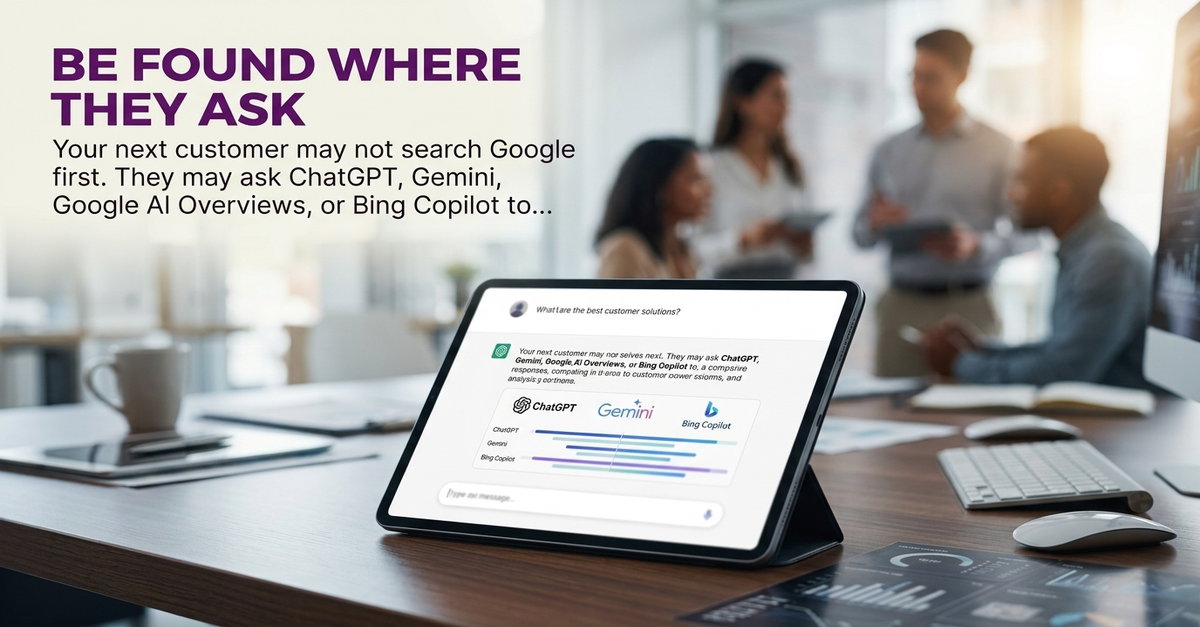
AI search is now a major visibility shift. People increasingly use ChatGPT, Gemini, Copilot, and other assistants to research vendors, compare solutions, and ask business questions. Strong AI search optimization helps brands prepare structured, useful, and discoverable content for these new discovery environments.
McKinsey research on generative AI highlights meaningful productivity potential across marketing and sales functions. The real opportunity is not replacing strategy. It is improving execution speed, insight quality, and operational consistency.
A healthy optimization rhythm includes:
- Weekly campaign checks for budget and lead quality.
- Monthly SEO and content reviews.
- Landing page tests for high value campaigns.
- CRM source audits for attribution accuracy.
- AI search visibility checks for important topics.
- Quarterly strategy reviews tied to ROI.
When everything works fine, this rhythm protects growth.
What To Check Before You Change Your Strategy
Before changing your digital marketing strategy, confirm whether the current system is measured correctly. Many businesses replace campaigns too early because tracking, landing pages, CRM workflows, or follow up processes are weak. A structured audit helps identify whether the problem is traffic, conversion, lead handling, or channel fit.
A strategy change can be expensive if the real issue is operational. For example, a company may pause a paid campaign because it appears unprofitable. Later, the team discovers that many form submissions were not synced to CRM. Another business may assume SEO is failing, when the landing page lacks a clear offer. These are not strategy failures. They are execution and measurement failures.
Digital marketing audit checklist for stable campaigns
Start with a simple audit:
- Confirm every lead form works on mobile and desktop.
- Check whether call clicks and form submissions are tracked.
- Review whether each lead enters CRM with the right source.
- Compare marketing leads with sales accepted leads.
- Inspect landing pages for relevance and speed.
- Review whether content matches buyer questions.
- Check whether paid media campaigns exclude poor intent traffic.
Then review business context. Has the market changed? Are competitors bidding more aggressively? Are AI search platforms showing different sources? Are customer questions changing? These checks help you decide whether to refine execution or rebuild the strategy.
Leadmetrics supports this process through AI powered strategy, execution, automation, and reporting. Businesses can also review case studies to understand how structured marketing systems connect visibility, lead generation, and ROI focused decision making.
Conclusion
Digital marketing can appear stable while hidden gaps reduce lead quality, ROI, and growth potential. The safest time to improve tracking, automation, campaign optimization, AI search visibility, and CRM workflows is when everything works fine. Regular reviews help teams detect issues early, reduce cost leakage, and improve qualified lead generation. Leadmetrics AI brings SEO, paid ads, maps, social media, AI search optimization, marketing automation, and reporting into one AI powered software platform. To improve performance before problems grow, book a demo and build a smarter digital marketing system.
Leave a Reply