Category: Uncategorized

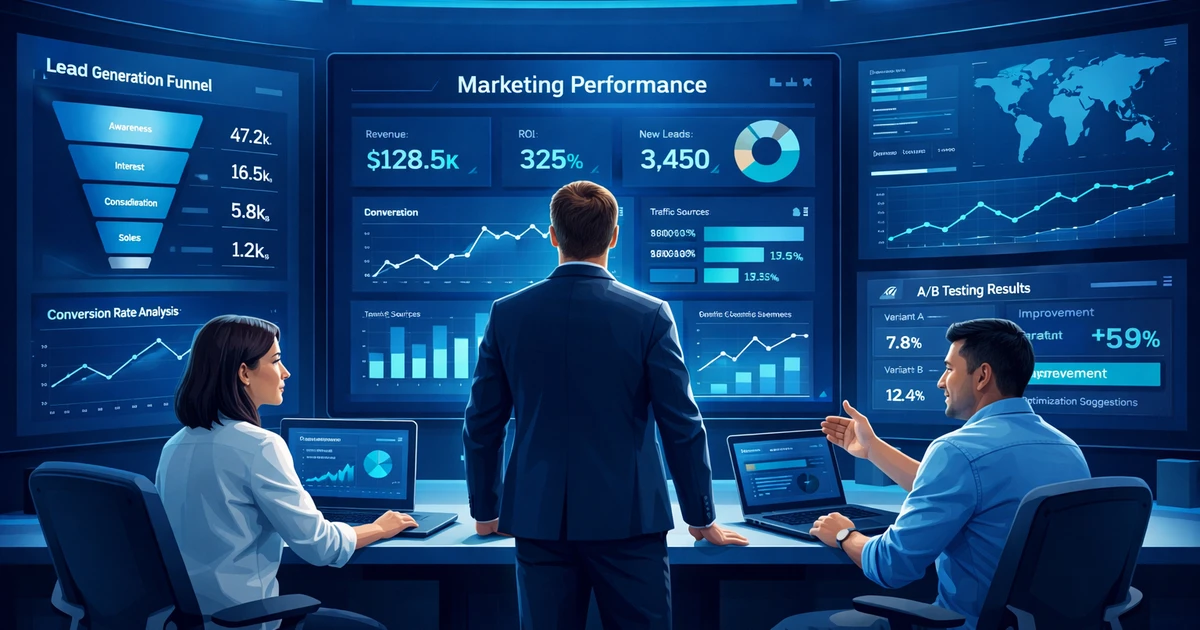
  • Marketing Test Guide for AI Powered Growth Teams

    Marketing Test Guide for AI Powered Growth Teams

    Marketing Test Guide for AI Powered Growth Teams

    A marketing test helps you stop guessing and start improving growth with evidence. For business owners and marketing professionals, every campaign decision affects budget, lead generation, and revenue. The right test shows what works, what fails, and where optimization should happen next. In this guide, you will learn how to build a practical AI powered testing process, use data analytics with confidence, and turn small experiments into high quality results across search, social, ads, and conversion funnels.

    Key Takeaways

    • A marketing test gives your team clear proof before scaling campaigns, offers, creatives, or landing pages.
    • AI powered tools improve testing speed by finding patterns in data analytics, audience behavior, and conversion signals.
    • The best testing system connects lead generation, campaign optimization, and tailor made strategy into one repeatable workflow.

    What Is a Marketing Test?

    A marketing test is a controlled experiment that compares one campaign choice against another to learn which option performs better. It helps teams measure audience response, reduce wasted spend, and improve decisions. When AI powered data analytics supports the process, testing becomes faster, clearer, and more useful for long term growth across digital channels.

    A simple marketing test can compare two ad headlines, two landing page layouts, or two email offers. The goal is not to prove an opinion. The goal is to gather reliable data that guides the next action.

    For example, if one landing page generates more qualified inquiries, your team can scale that version with greater confidence. This is especially valuable when budgets are limited and every campaign must deliver high quality results.

    Modern testing works best when it supports a wider digital marketing strategy. If your business wants a more automated approach, Leadmetrics can support campaign planning through its marketing services, built to connect strategy, execution, and optimization.

    Why a Marketing Test Protects Your Budget

    Running a marketing test before scaling protects your budget and improves campaign quality. Instead of investing heavily in an unproven message, audience, or channel, you validate performance first. This gives marketing teams a practical way to reduce risk while improving lead generation across the funnel.

    Many businesses scale too early. They launch ads, increase spend, and expect better results without checking whether the offer, audience, or page is ready. This often leads to poor conversion rates and unclear reporting.

    A test gives you a smaller, safer environment. You can learn whether a new offer attracts the right buyer. You can also check whether your message creates real intent.

    For example, a service business might test two lead magnets. One may attract general curiosity, while the other brings buyers ready to book a consultation. That difference matters because lead quality is often more important than lead volume.

    Good testing also strengthens team alignment. Sales, marketing, and leadership can review the same data analytics instead of debating assumptions. Teams that want a broader AI powered foundation can also review Leadmetrics insights on AI lead generation for businesses.

    How to Build an AI Powered Marketing Test

    An AI powered marketing test needs a clear goal, one measurable variable, and enough data to compare outcomes fairly. Automation can analyze signals quickly, but strategy still needs human direction. The strongest tests combine structured tracking, practical context, and optimization workflows that turn campaign evidence into confident action for teams.

    Start by defining one specific question. Do not test everything at once. A focused question might be, “Which landing page headline produces more demo requests?” Another useful question could be, “Which audience segment generates lower cost qualified leads?”

    Next, choose one variable. This may include:

    • Ad headline
    • Landing page hero message
    • Call to action
    • Lead form length
    • Offer type
    • Audience segment
    • Email subject line

    Then define the success metric. For lead generation, this could be booked calls, qualified form submissions, or cost per qualified lead. For awareness, it might be engaged sessions or branded search lift.

    AI powered tools improve this process by spotting trends faster. They can highlight audience segments, predict performance changes, and reveal weak points in the funnel. Leadmetrics supports this kind of structured growth with tailor made digital marketing strategies and practical campaign execution.

    Marketing Test Metrics That Actually Matter

    The best marketing test metrics measure business impact, not vanity activity. Clicks and impressions can be useful signals, but they rarely tell the full story. For stronger decisions, focus on conversion rate, qualified lead volume, cost per lead, sales readiness, and revenue influenced by each tested variation.

    A test can look successful on the surface and still fail commercially. For example, one ad creative may get more clicks, but another may generate fewer clicks and better leads. The second creative is often more valuable.

    Track metrics across three levels:

    1. Engagement metrics: Click through rate, scroll depth, time on page, and video views.
    2. Conversion metrics: Form submissions, booked calls, demo requests, and checkout starts.
    3. Business metrics: Qualified leads, pipeline value, close rate, and customer acquisition cost.

    Use tools like Google Analytics 4 to understand user behavior after the click. Pair this with CRM data to measure lead quality. AI powered data analytics can then connect campaign performance with actual sales outcomes.

    This approach helps teams move beyond surface reporting. It also supports better budget allocation across channels, including SEO, paid search, and social media. For search focused tests, Leadmetrics provides AI driven search engine optimization that connects content performance with measurable conversion outcomes.

    Using Data Analytics for Better Lead Generation

    Data analytics turns a marketing test into a repeatable growth system by showing which audience, message, channel, and offer create stronger lead generation outcomes. With AI powered insights, teams can identify conversion patterns, find funnel friction, and make faster decisions without relying only on opinion or slow manual reporting cycles.

    Lead generation improves when your data shows what prospects actually do. A page may get traffic, but the important question is whether that traffic converts into qualified opportunities. Data analytics helps you find the gap.

    For example, your test may show that mobile visitors leave before completing a form. This may point to a slow page, too many fields, or unclear value. A second test could simplify the form and measure whether completion rates improve.

    You can also use data analytics to compare traffic sources. Organic search may bring fewer visitors than ads, but those visitors may convert at a higher rate. In that case, investing in a more complete search and content strategy may produce better long term returns.

    Conversion optimization works best when it addresses real user behavior. AI can review heatmaps, form completion data, ad performance, and search intent signals. It can then help prioritize which changes deserve testing first.

    For example, if users from paid search convert well on service pages but leave blog pages quickly, AI may suggest clearer calls to action or stronger internal links. If email leads open messages but do not click, it may recommend testing a more direct offer.

    The goal is not to automate judgment completely. The goal is to combine AI powered analysis with human strategy. That balance creates high quality results.

    Marketing Test Workflow for Repeatable Optimization

    A repeatable workflow helps your team turn every marketing test into structured learning. It creates a clear process for planning, launching, measuring, and documenting experiments. This keeps optimization consistent, improves data analytics quality, and helps teams build a library of insights that supports future campaigns.

    A strong workflow includes five steps:

    1. Define the business goal. Decide whether the test supports leads, sales, retention, or engagement.
    2. Create the hypothesis. Write a clear statement about what you expect to happen.
    3. Launch the test. Keep variables controlled and tracking accurate.
    4. Analyze the results. Review both numbers and lead quality.
    5. Document the learning. Save insights for future campaigns.

    Documentation matters more than many teams realize. Without it, businesses repeat old mistakes. A testing library helps new campaigns launch faster because your team already knows which offers, messages, and audiences perform best.

    This is also where AI powered platforms create efficiency. They can connect campaign data, recommend next actions, and reduce manual reporting. If you want to assess your current growth setup, start with a digital marketing audit to identify testing gaps and optimization opportunities.

    Common Marketing Test Mistakes to Avoid

    A marketing test fails when the setup is unclear, the sample is too small, or the team changes too many elements at once. These mistakes make results unreliable. Better testing focuses on one meaningful variable, defines success early, and reviews performance through both data analytics and commercial context consistently together.

    The most common mistake is testing without a clear hypothesis. A good hypothesis sounds like this: “If we make the consultation offer more specific, then qualified demo requests will increase.” This gives the test direction.

    Other mistakes include:

    • Testing too many changes at once
    • Ending the test too early
    • Measuring clicks instead of qualified leads
    • Ignoring mobile experience
    • Using weak tracking
    • Treating one test as a final answer
    • Forgetting sales feedback

    Another issue is testing without enough traffic. If your sample is too small, results may be misleading. In that case, use directional learning rather than final conclusions. The Nielsen Norman Group explains that testing works best when teams understand both statistical evidence and user experience context.

    Businesses also need to connect tests with broader market positioning. A headline that performs well today may weaken over time if competitors copy it. Continuous optimization keeps your messaging relevant.

    You should stop a marketing test when results are clear, the sample is sufficient, or performance shows that continuing would waste budget. You should scale when the winning variation improves the metric that matters most. For lead generation, that usually means better qualified leads, not just more clicks.

    Do not scale a test only because it has a higher click through rate. First, check whether the winning version improves the full journey. Did more visitors become leads? Did those leads match your target customer profile? Did sales confirm better quality?

    A practical decision framework includes:

    • Stop if both versions perform poorly and the offer needs rethinking.
    • Continue if results are promising but sample size is too small.
    • Scale if one version improves qualified conversions and cost efficiency.
    • Retest if external factors may have influenced results.

    This is where AI powered optimization becomes useful. It helps detect whether performance is stable or driven by temporary noise. It can also recommend the next experiment.

    For many growth teams, this process becomes a monthly rhythm. Test, analyze, improve, and repeat. Over time, small gains compound into stronger lead generation performance. You can explore more practical growth ideas on the Leadmetrics blog.

    Conclusion

    A marketing test gives your business a smarter path to growth by replacing assumptions with evidence. When teams combine AI powered data analytics, controlled experiments, and clear optimization priorities, they can improve lead generation while protecting budget. The result is a repeatable system that supports faster decisions and stronger campaign performance.

    A marketing test gives your business a smarter path to growth. It replaces assumptions with data analytics, improves lead generation, and helps your team scale only what proves valuable. AI powered tools make the process faster, but success still depends on clear goals, controlled variables, and practical interpretation. Start small, test one meaningful change, and connect every result to business outcomes. If you want tailor made support for high quality results, contact Leadmetrics to build a stronger optimization system or book a demo to see how AI powered optimization can support your next campaign.

  • Superior Vena Cava Anatomy Symptoms and Care Guide

    Superior Vena Cava Anatomy Symptoms and Care Guide

    Superior vena cava is a major vein that carries blood from the upper body back to the heart. If you searched for “supirior vina cava,” the correct medical term is superior vena cava. Understanding this vein matters because blockage or compression can cause serious symptoms, including swelling, breathing difficulty, and visible chest veins. This guide explains the anatomy, common problems, warning signs, diagnosis, treatment options, and how healthcare teams can communicate this topic clearly using AI-powered content optimization.

    Key Takeaways

    The superior vena cava returns blood from the head, neck, arms, and upper chest to the heart. Problems often involve superior vena cava obstruction or SVC syndrome, which needs medical evaluation.

    Symptoms of SVC syndrome can include facial swelling, shortness of breath, coughing, and enlarged veins in the neck or chest.

    Accurate medical education supports better patient decisions, while healthcare organizations can use AI-driven search engine optimization to improve visibility responsibly.

    What Is the Superior Vena Cava?

    The superior vena cava is one of the body’s largest veins, and it plays a simple but vital role in circulation. It collects oxygen poor blood from the upper half of the body and delivers it into the right atrium of the heart, where the next stage of blood flow begins.

    The superior vena cava sits in the upper chest, close to the right side of the heart. It is formed when the right and left brachiocephalic veins join together. These veins collect blood from the head, neck, arms, and upper chest.

    This vein then empties directly into the right atrium. From there, blood travels to the lungs to pick up oxygen. Because the superior vena cava handles blood return from many important areas, pressure or blockage can quickly affect visible parts of the body.

    For example, swelling in the face or neck may happen when blood cannot drain normally. The Cleveland Clinic provides a clear overview of the superior vena cava and its role in circulation.

    Image alt text: Medical diagram showing superior vena cava anatomy and blood flow into the heart.

    Superior Vena Cava Anatomy and Blood Flow

    Superior vena cava anatomy is closely linked to the veins of the head, neck, arms, and chest. Its location near the lungs, lymph nodes, and major chest structures explains why tumors, blood clots, or medical devices can sometimes interfere with normal blood return.

    The superior vena cava is shorter than many people expect. It is usually about seven centimeters long in adults. Still, its importance is high because it handles a large volume of venous blood.

    Its key connected veins include:

    • Right brachiocephalic vein
    • Left brachiocephalic vein
    • Azygos vein
    • Internal jugular veins through upstream drainage
    • Subclavian veins through upstream drainage

    The vein passes through the mediastinum, which is the central space in the chest. This area also contains the heart, trachea, esophagus, lymph nodes, and major blood vessels.

    That crowded location creates risk. If a nearby tumor grows, lymph nodes enlarge, or a clot forms around a catheter, the superior vena cava can become narrowed. This can slow blood return and raise pressure in upper body veins.

    For healthcare brands explaining anatomy online, clarity matters. Complex medical topics need plain language, visuals, and careful content structure. A tailor-made digital marketing strategy can help clinics publish accurate education without confusing patients.

    Superior Vena Cava Syndrome and Common Causes

    Superior vena cava syndrome happens when blood flow through the superior vena cava becomes partly or fully blocked. This blockage increases pressure in the veins above the heart, leading to swelling and breathing symptoms that can become urgent depending on the cause and severity.

    Superior vena cava syndrome is often called SVC syndrome. It is not a disease by itself. It is a group of symptoms caused by obstruction of the superior vena cava.

    Common causes include:

    • Lung cancer pressing on the vein
    • Non Hodgkin lymphoma or other chest cancers
    • Blood clots linked to central venous catheters
    • Pacemaker wires or implanted medical devices
    • Enlarged lymph nodes in the chest
    • Fibrosis or scarring after treatment

    Cancer remains one of the most recognized causes. However, non cancer causes have become more common because more people now receive long term catheters, ports, and cardiac devices.

    According to the National Cancer Institute, superior vena cava syndrome may need urgent treatment when symptoms affect breathing or brain function.

    A practical example is a patient with a history of lung cancer who develops new facial swelling and shortness of breath. In that setting, clinicians may quickly order imaging to check whether a tumor is compressing the vein.

    Healthcare teams can use data analytics to identify which patient education pages answer urgent questions well. This improves content quality, search visibility, and patient experience without treating education as simple lead generation.

    Symptoms of SVC Syndrome to Watch

    Symptoms of SVC syndrome often appear in the face, neck, arms, and upper chest because these areas drain into the superior vena cava. Some symptoms develop slowly, while others progress quickly and require emergency care, especially when breathing, swallowing, or mental alertness changes.

    The symptoms of SVC syndrome vary by the speed and severity of blockage. When narrowing develops slowly, the body may create collateral veins. These are alternate pathways for blood flow.

    Common symptoms include:

    • Swelling of the face, neck, or eyelids
    • Swelling in one or both arms
    • Shortness of breath
    • Coughing or hoarseness
    • Chest discomfort
    • Headache or dizziness
    • Visible veins on the chest or neck
    • Trouble swallowing
    • Bluish skin tone in severe cases

    Symptoms may feel worse when lying down or bending forward. This happens because blood return becomes even more difficult in those positions.

    Seek urgent medical care if swelling happens with breathing trouble, confusion, fainting, or severe headache. These signs may suggest serious pressure changes or airway risk.

    For healthcare marketers, this is where responsible content optimization matters. Pages about warning signs must be clear, reviewed, and easy to act on. AI-powered tools can support structure and visibility, but medical accuracy must remain the priority.

    Teams building patient education can also review AI search optimization to understand how answer engines surface trustworthy health information.

    Diagnosis and Treatment Options

    Doctors diagnose superior vena cava problems by combining symptoms, physical examination, imaging, and the patient’s medical history. Treatment depends on the cause, and may involve cancer therapy, clot management, stents, or supportive care to reduce swelling and restore safer blood flow.

    Diagnosis usually starts with a physical exam. A clinician may look for swelling, enlarged veins, breathing changes, and signs of an underlying condition.

    Common tests may include:

    • Chest X ray
    • CT scan with contrast
    • MRI in selected cases
    • Ultrasound for related clots
    • Venography when detailed vein mapping is needed
    • Biopsy if cancer or lymphoma is suspected

    Treatment depends on what blocks or compresses the superior vena cava. If a tumor causes the problem, doctors may use chemotherapy, radiation therapy, targeted therapy, or immunotherapy. If a blood clot causes obstruction, anticoagulant medicine may be used.

    In some cases, doctors place a stent inside the vein. A stent can open the narrowed area and improve blood flow. This may relieve symptoms quickly for selected patients.

    Supportive care can include elevating the head, oxygen, and medicines to reduce swelling when appropriate. Treatment should always be guided by qualified clinicians.

    For healthcare businesses, educational pages about diagnosis should avoid fear based messaging. They should guide readers toward professional evaluation. A strong AI-powered digital marketing strategy can help combine accuracy, optimization, and high-quality results.

    Why Clear Medical Content Matters Online

    Patients often search symptoms before they contact a clinician, so clear medical content can influence how quickly they seek help. Healthcare organizations need reliable explanations, careful wording, and ethical search strategies that support informed decisions instead of creating confusion or unnecessary alarm.

    Medical content sits in a sensitive category because readers may make decisions based on what they learn. That means every page should use accurate terms, explain urgency clearly, and avoid overpromising.

    A useful superior vena cava article should answer:

    • What does this vein do?
    • What can go wrong?
    • Which symptoms need urgent care?
    • How do doctors diagnose it?
    • What treatments may be considered?

    This structure supports both readers and search engines. It also helps AI answer systems understand the page.

    For clinics, hospitals, and health service providers, optimization is not only about rankings. It is about helping the right person find the right answer at the right time. Leadmetrics supports this with AI-powered workflows, data analytics, and efficient content systems built for measurable growth.

    Organizations that want to improve visibility can explore AI lead generation for businesses, especially when patient education connects to service discovery.

    Conclusion

    The superior vena cava is essential for returning blood from the upper body to the heart. When it becomes compressed or blocked, SVC syndrome can cause swelling, breathing issues, visible veins, and other concerning symptoms. Early medical evaluation matters, especially when symptoms progress quickly. For healthcare organizations, clear education builds trust and helps readers take the right next step. If your team wants accurate, optimized, and patient focused content systems, you can book a demo with Leadmetrics to explore AI-powered marketing optimization.

  • Stonehenge Marketing Lessons for Modern Business Growth

    Stonehenge Marketing Lessons for Modern Business Growth

    Stonehenge still captures global attention thousands of years after its creation. For business owners and marketing professionals, that level of visibility is more than history. It is a strategic lesson in positioning, trust, storytelling, and long term relevance. This guide explains what Stonehenge can teach modern brands about AI-powered marketing, data analytics, lead generation, and optimization. You will learn how an ancient monument can inspire practical digital strategies that deliver high-quality results in competitive markets.

    Key Takeaways

    • Stonehenge proves that memorable positioning and consistent visibility can create lasting demand.
    • Modern brands can use data analytics, search intent, and AI-powered optimization to build authority with more precision.
    • Strong marketing works best when every channel supports one clear story, one measurable goal, and one tailor-made growth strategy.

    Why Stonehenge Still Commands Attention

    Stonehenge remains powerful because it combines mystery, scale, cultural meaning, and clear visual identity into one unforgettable landmark. For marketers, this shows why brand visibility depends on more than being seen. It depends on being remembered, discussed, trusted, and discovered repeatedly across search, social, and customer decision journeys.

    Stonehenge is one of the most recognised prehistoric monuments in the world. UNESCO lists Stonehenge, Avebury and Associated Sites as a World Heritage Site, highlighting their global cultural importance. English Heritage notes that the monument developed over many centuries, with major construction phases between roughly 3000 and 2000 BCE.

    That long timeline matters for business. Brands rarely become trusted overnight. They earn attention through consistency, relevance, and repetition. Stonehenge became iconic because it occupied a clear place in culture and geography. Modern brands need the same clarity online.

    A company that wants stronger visibility should define:

    • What it wants to be known for
    • Which audience it serves best
    • Which channels influence that audience
    • What evidence proves its authority
    • How each campaign supports revenue goals

    This is where AI-powered digital marketing gives businesses an advantage. It helps teams connect visibility with performance, rather than relying on scattered campaigns. Stonehenge teaches the value of presence. AI helps brands turn that presence into measurable growth.

    Stonehenge History Shows the Power of Positioning

    Stonehenge history shows that location, design, and meaning can make a structure more influential than its physical size alone. In marketing, positioning works the same way. Your offer becomes stronger when customers understand why you matter, where you fit, and what makes your value difficult to replace.

    Stonehenge was not placed randomly. Its alignment, surrounding landscape, and ceremonial associations created meaning. According to English Heritage, the monument has links to solstice alignments, burial practices, and changing communities over time. The site became significant because its location and purpose worked together.

    Businesses can apply the same idea through positioning. A brand should not only say what it sells. It should explain why its solution matters now. For example, a local service business does not need to target every customer. It needs to target the right customers with the right message at the right moment.

    Effective positioning includes three layers:

    1. Audience relevance
      Your message must match the customer problem.

    2. Competitive contrast
      Your offer must show why it differs from alternatives.

    3. Conversion intent
      Your content must guide users toward action.

    Leadmetrics supports this through tailor-made digital marketing strategies that align channels, budgets, and business goals. Stonehenge did not become memorable by being vague. Your marketing should not be vague either.

    Stonehenge Facts That Matter for Brand Visibility

    Stonehenge facts are compelling because they give people reasons to search, share, visit, and learn more. Brands need the same effect online. Useful facts, proof points, customer insights, and performance data help turn casual interest into trust, search visibility, and better qualified lead generation opportunities.

    People continue to search for Stonehenge because it inspires questions. Who built it? Why was it built? How were the stones moved? What did it mean to ancient communities? Those questions create ongoing interest.

    Marketing teams should build content around the same principle. Strong content answers real customer questions before a sales conversation begins. This improves search visibility and gives prospects more confidence.

    For example, a business can create content around:

    • Common buying questions
    • Pricing concerns
    • Service comparisons
    • Implementation timelines
    • Industry misconceptions
    • Customer success stories

    This approach supports both search and lead generation. When your content solves actual customer problems, it attracts visitors with stronger intent. It also gives sales teams better context before outreach.

    Search visibility also requires technical structure. Businesses can improve this through AI-driven search engine optimization, which helps identify keyword gaps, ranking opportunities, and content improvements. Stonehenge attracts attention because people keep asking questions. Your content should give your audience better answers than anyone else.

    What Businesses Can Learn From Ancient Engineering

    Stonehenge was not a single action. It was a coordinated system of planning, materials, labour, sequence, and shared purpose. Modern marketing also works as a system. Search, paid media, content, social activity, analytics, and conversion tracking must operate together to produce high-quality results.

    The engineering behind Stonehenge remains impressive. Britannica describes Stonehenge as a prehistoric stone circle, cemetery, and archaeological site, with construction involving large sarsen stones and smaller bluestones. Even without modern tools, its builders achieved coordination at scale.

    That systems thinking is highly relevant for marketing. Many businesses struggle because they treat channels separately. SEO runs in one direction. Paid ads run in another. Social media focuses on activity rather than outcomes. Analytics sits unused.

    A better model connects everything:

    1. Data analytics identifies market demand.
    2. SEO captures intent from search.
    3. Paid media accelerates visibility.
    4. Content builds authority.
    5. Landing pages convert interest.
    6. Automation improves follow up.
    7. Reporting guides optimization.

    This is also why technical thinking matters. If you enjoy understanding how systems work at a deeper level, Leadmetrics has related technical guides such as the 8086 Assembly Language Guide for Beginners and Pros and the 555 Mono Stable Circuit Complete Beginner Guide. Different fields, same lesson. Strong systems depend on well connected parts.

    Marketing teams that connect channels produce better decisions. They stop guessing and start optimizing.

    Stonehenge and the Modern Customer Journey

    Stonehenge attracts different people for different reasons, including history, architecture, spirituality, tourism, education, and photography. Modern customers behave similarly. They enter the journey with different motivations, so brands need content, targeting, and lead generation systems that match each stage of intent.

    Not every Stonehenge visitor has the same purpose. Some want academic context. Some want a memorable travel experience. Some want to witness the solstice. The landmark serves multiple intents without losing its identity.

    Businesses face the same challenge. A visitor who reads a beginner guide is not always ready to buy. A visitor comparing vendors may be close to a decision. A returning lead may need proof, pricing clarity, or a consultation.

    A high performing customer journey usually includes:

    • Awareness content for early research
    • Educational content for problem understanding
    • Comparison content for vendor evaluation
    • Case studies for trust
    • Landing pages for conversion
    • Follow up workflows for sales readiness

    This is where AI lead generation becomes valuable. AI can analyse behaviour, segment intent, and help teams prioritize the leads most likely to convert. It also supports faster optimization by showing which messages, channels, and offers create the best results.

    Stonehenge teaches us that one landmark can support many journeys. Your brand can do the same when content and data work together.

    How to Apply Stonehenge Lessons to Your Marketing

    The practical value of Stonehenge for marketers is not nostalgia. It is a framework for building lasting visibility. Brands should define a clear identity, answer persistent customer questions, connect every channel, and use data analytics to improve each campaign with measurable optimization.

    To turn these ideas into action, start with a simple audit. Ask whether your brand is easy to find, easy to understand, and easy to trust. If the answer is unclear, your marketing may need stronger structure.

    Use this practical checklist:

    1. Define your core message
      State what you do, who you serve, and why you are different.

    2. Map customer intent
      Identify what buyers search before they contact you.

    3. Build content around questions
      Answer the questions your sales team hears every week.

    4. Connect channels
      Align SEO, ads, social, email, and landing pages.

    5. Measure the full journey
      Track rankings, traffic, conversions, cost per lead, and sales quality.

    6. Improve continuously
      Use data analytics to guide campaign optimization.

    Businesses that follow this process move from random activity to strategic growth. They also reduce wasted spend because every campaign has a defined role. If you need a structured growth model, explore Leadmetrics AI search optimization to strengthen visibility across traditional and emerging discovery platforms.

    Conclusion: Turn Stonehenge Lessons Into Growth

    Stonehenge endures because it combines visibility, meaning, structure, and curiosity. Modern marketing needs the same foundation, supported by better tools. With AI-powered strategy, data analytics, lead generation systems, and continuous optimization, businesses can build a presence that attracts attention and converts demand.

    Stonehenge is more than an ancient monument. It is a reminder that lasting visibility comes from clarity, consistency, and purpose. Businesses can apply the same principles by strengthening positioning, answering customer questions, connecting channels, and measuring outcomes. The difference today is speed. AI-powered tools help brands act faster and deliver high-quality results with less waste. If you want a tailor-made plan for stronger lead generation and smarter optimization, book a demo with Leadmetrics and start building a marketing system designed for growth.

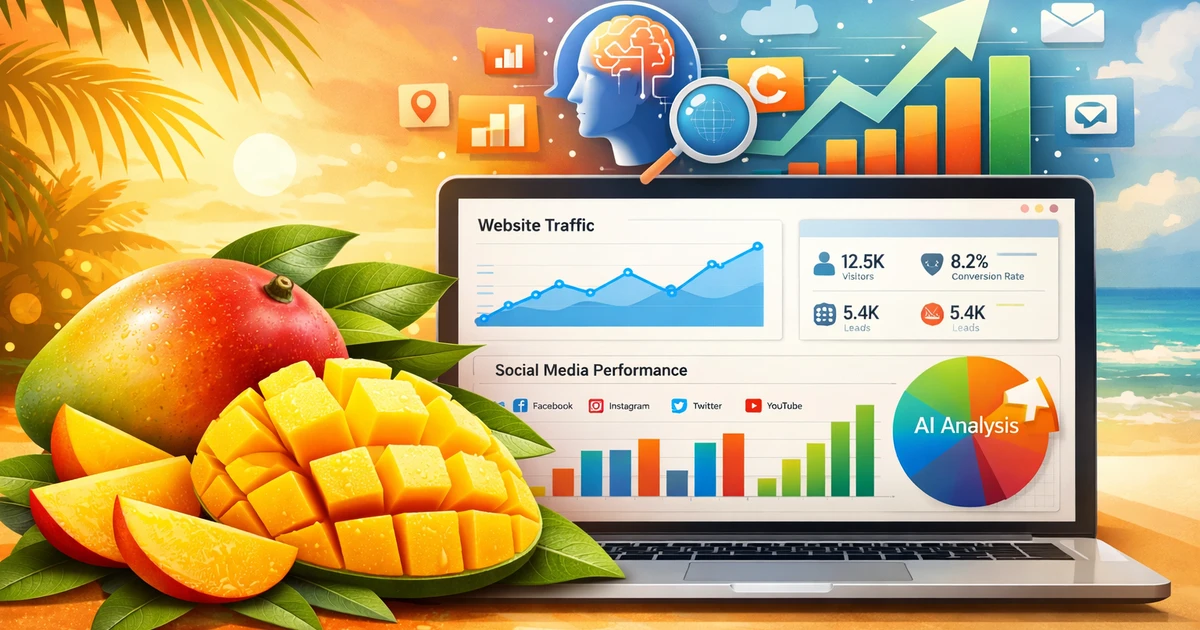
  • Mango Marketing Strategy Complete Guide for Growth

    Mango Marketing Strategy Complete Guide for Growth

    Mango Marketing Strategy Complete Guide for Growth

    Mango marketing strategy matters when a product is loved, seasonal, visual, and highly competitive. Business owners, growers, distributors, cafes, ecommerce stores, and food brands need more than attractive images to win attention. They need clear positioning, data analytics, lead generation, and optimization across every channel. This guide explains how to turn mango demand into measurable growth using AI-powered planning, tailor-made campaigns, and practical digital marketing systems that deliver high-quality results.

    Key takeaways

    • A strong mango marketing strategy starts with buyer intent, seasonality, and clear audience segmentation.
    • AI-powered tools improve content planning, lead generation, campaign optimization, and customer follow up.
    • Mango brands can grow faster by combining SEO, social proof, paid ads, and conversion focused landing pages.

    Mango Marketing Strategy Starts With Demand Signals

    The best mango marketing strategy begins with understanding when people search, why they buy, and what proof they need before choosing a seller. Demand can shift by season, location, price, freshness, gifting needs, and delivery speed, so brands must use data analytics before creating content, ads, offers, or lead generation campaigns.

    A mango business should first map demand signals across search, social media, marketplaces, and customer conversations. For example, a grocery brand may notice searches for ripe mango delivery during peak season, while a restaurant may see higher interest in mango desserts before summer menus launch.

    Use these signals to decide what to promote. Do not market every mango product in the same way. Fresh mango boxes, pulp, smoothies, desserts, and corporate gift packs all need different messages.

    A practical demand map should include:

    • Buyer type, such as household, restaurant, retailer, or gift buyer
    • Buying trigger, such as taste, freshness, price, origin, or convenience
    • Channel preference, such as Google Search, Instagram, WhatsApp, or ecommerce
    • Conversion path, such as call, form, checkout, or store visit

    According to the Food and Agriculture Organization, mangoes are part of the global tropical fruit category with strong international trade relevance. That means competition is not only local. Even small brands need a professional digital presence.

    If your team wants an AI-powered system for search visibility, explore Leadmetrics for AI driven search engine optimization. It can support keyword planning, content optimization, and performance tracking for competitive markets.

    Mango Buyer Personas for Seasonal Campaigns

    Seasonal campaigns work better when each mango buyer persona receives a message that matches their intent. A family may care about sweetness and ripeness, while a retailer may care about supply consistency, margin, and delivery. Persona based planning helps brands build tailor-made promotions instead of generic posts that fail to convert.

    Start with three or four buyer personas. Keep them simple, but specific. A household buyer may search for how to buy sweet mangoes online. A cafe owner may search for bulk mango pulp supplier. A corporate buyer may want premium mango gift boxes.

    Each persona needs its own offer and landing page message. For example, a household buyer responds to freshness, reviews, and same day delivery. A cafe owner needs bulk pricing, quality assurance, and repeat supply options.

    This approach also improves paid advertising. Instead of one campaign for everyone, create separate ad groups for each intent. That makes campaign optimization easier because you can see which audience delivers the best return.

    Build a Mango Content Engine for Search and Trust

    Content helps mango brands answer buyer questions before competitors do. Search optimized articles, product pages, recipes, buying guides, and comparison content can improve visibility while building trust. The goal is not just traffic. The goal is to guide interested buyers toward enquiries, orders, subscriptions, store visits, or repeat purchases.

    A strong content engine answers real questions. People may ask what type of mango is sweetest, how to store mangoes, where to buy mangoes online, or whether mango pulp is good for restaurants. Each question can become a content asset.

    Google recommends creating helpful, reliable, people first content through its Search Central guidance. For mango businesses, this means content should be specific, useful, and based on genuine product knowledge.

    Examples of useful mango content include:

    • A buying guide for choosing ripe mangoes
    • A comparison of mango varieties by taste and use
    • A recipe page for mango smoothies and desserts
    • A supplier page for hotels, cafes, and restaurants
    • A seasonal preorder page for premium mango boxes

    This is where AI-powered marketing becomes efficient. AI can find search patterns, cluster topics, and recommend updates. Human teams should still verify claims, add product expertise, and keep the brand voice authentic.

    For broader planning, Leadmetrics explains how AI can support marketing systems in the complete guide to AI-powered digital marketing for SMBs.

    Mango SEO Content That Answers Buyer Questions

    Mango SEO content should match the exact questions buyers ask before purchase. Searchers want practical answers about freshness, taste, price, origin, delivery, storage, and usage. When content directly answers those questions, it attracts qualified visitors and creates a smoother path from discovery to lead generation or online purchase.

    Do not create content only around high volume terms. Use long tail queries too. A customer who searches where to buy fresh mangoes for office gifting has stronger intent than someone who only searches mango.

    Good long tail topics include:

    • How to market mangoes online during peak season
    • Best way to sell mango gift boxes to businesses
    • How to promote fresh mango delivery locally
    • What mango variety is best for smoothies
    • How restaurants can buy mango pulp in bulk

    Each page should have a clear call to action. For example, a blog about mango storage can invite readers to order a fresh box. A guide for cafes can include a supplier enquiry form.

    A clean site structure also matters. Link recipe pages to product pages. Link variety guides to ordering pages. Link B2B content to bulk enquiry forms. These internal paths turn education into conversion.

    Use Data Analytics to Improve Mango Lead Generation

    Data analytics turns mango marketing from guesswork into measurable action. Instead of judging campaigns by likes or impressions alone, brands can track which keywords, ads, offers, locations, and landing pages generate real enquiries. This improves lead generation, reduces wasted budget, and helps teams focus on channels that create high-quality results.

    Lead generation for mango brands can include order forms, retailer enquiries, WhatsApp clicks, catering requests, newsletter signups, and demo style requests for wholesale buyers. The right conversion depends on the business model.

    Track every important action. If people call after seeing a Google ad, track calls. If restaurants request price lists, track form submissions. If customers abandon checkout, track the drop off point.

    Useful metrics include:

    • Cost per lead
    • Conversion rate by landing page
    • Search term performance
    • Repeat purchase rate
    • Average order value
    • Revenue by campaign
    • Enquiry quality by audience segment

    Data also reveals weak points. A campaign may get many clicks but few leads. That could mean the landing page lacks trust signals, price clarity, or delivery information. Optimization should focus on the problem, not just the ad.

    For companies that want more automated lead capture, Leadmetrics offers guidance on AI lead generation for businesses. The same principles apply to fresh produce, food service, ecommerce, and local retail.

    Mango Campaign Optimization Across Channels

    Mango campaign optimization should connect search, social media, email, landing pages, and retargeting into one growth system. A buyer may discover a mango brand on Instagram, compare options on Google, read reviews, and return through an ad. Tracking this journey helps teams spend smarter and improve every conversion step.

    A practical mango campaign can run across four stages.

    First, attract attention with visual content. Mangoes are colourful, emotional, and highly shareable. Use close up product visuals, recipe videos, harvest stories, and customer reviews.

    Second, capture intent through search campaigns. People actively looking for fresh mango delivery or bulk mango supplier are closer to purchase.

    Third, build trust with proof. Show sourcing details, freshness standards, testimonials, delivery areas, and refund policies.

    Fourth, retarget interested users. Someone who viewed a mango gift box page may return if they see a limited season offer.

    This is where tailor-made digital marketing strategies work better than fixed templates. Every mango business has different margins, locations, stock cycles, and buyer groups. If you need a customized approach, review Leadmetrics tailor-made digital marketing strategies.

    Convert Mango Interest Into Sales With Better Landing Pages

    Traffic alone does not grow a mango business. Landing pages must explain the offer quickly, remove uncertainty, and make the next action simple. Whether the goal is online orders, wholesale enquiries, or store visits, the page should combine persuasive copy, proof, fast loading, and clear conversion focused design.

    A landing page for mango sales should answer five questions immediately.

    • What mango product is available?
    • Why is it better or different?
    • Where can customers get it?
    • How fresh is it?
    • What should they do next?

    For B2C pages, use product images, delivery details, pricing, reviews, and simple ordering. For B2B pages, include bulk supply details, minimum order quantity, certifications if available, and a short enquiry form.

    Avoid asking for too much information. A wholesale lead form may need name, business type, phone, location, and quantity. It does not need a long questionnaire at the first step.

    Landing pages also need trust signals. These can include customer photos, restaurant logos, harvest details, quality checks, and clear support information. Small improvements can lift conversion rates without increasing ad spend.

    If your brand already has traffic but few enquiries, consider running an AI marketing audit. It can help identify gaps in SEO, ads, content, tracking, and conversion optimization.

    FAQs About Mango Marketing Strategy

    Business owners often ask how to promote mango products online without wasting money. The answer depends on audience, location, margin, seasonality, and sales channel. A focused mango marketing strategy uses search intent, social proof, data analytics, and lead generation workflows to turn short seasonal demand into repeat business.

    What is the best way to market mangoes online?

    The best way is to combine search visibility, strong visuals, clear offers, and simple conversion paths. Use SEO content for buyer questions, social media for visual demand, and paid ads for high intent searches.

    How can mango sellers get more wholesale leads?

    Create dedicated B2B landing pages for restaurants, retailers, cafes, and corporate buyers. Add pricing guidance, supply capacity, delivery areas, and a short enquiry form. Then use lead generation campaigns to reach high intent buyers.

    Can AI-powered marketing help seasonal mango businesses?

    Yes. AI-powered tools can forecast content opportunities, group keywords, optimize campaigns, and identify weak conversion points. Human expertise still matters because freshness, sourcing, and customer trust require real brand knowledge.

    Conclusion: Turn Mango Demand Into Measurable Growth

    A profitable mango marketing strategy connects audience insight, content, data analytics, lead generation, and continuous optimization. Brands that plan around buyer intent can create high-quality results during peak season and beyond. With AI-powered systems and tailor-made campaigns, mango businesses can compete more efficiently and convert interest into sales.

    Mango demand is real, but attention disappears quickly in crowded markets. The brands that win make buying easy, answer questions clearly, and track every campaign properly. Start with demand signals, build helpful content, create focused landing pages, and use data analytics to improve decisions. If you want a smarter growth system, book a demo with Leadmetrics and explore how AI-powered marketing can support your next mango campaign.

  • 555 Mono Stable Circuit Complete Beginner Guide

    555 Mono Stable Circuit Complete Beginner Guide

    555 Mono Stable Circuit Complete Beginner Guide

    Hero image alt text: 555 mono stable circuit with 555 timer IC, resistor, capacitor, LED output, and pulse waveform.

    The 555 mono stable circuit is one of the simplest ways to create a controlled time pulse in electronics. If you press a button, trigger a sensor, or need a short delay, this circuit can turn one input event into one stable output pulse. In this guide, you will learn how the 555 timer works in monostable mode, how to calculate pulse duration, how to choose components, and how to troubleshoot common issues with confidence.

    Key takeaways

    • A 555 mono stable circuit produces one timed output pulse after a trigger event.
    • The pulse width depends mainly on one resistor and one timing capacitor.
    • Good layout, clean triggering, and smart component selection improve circuit optimization and high quality results.

    What Is a 555 Mono Stable Circuit?

    A 555 mono stable circuit, also called a monostable multivibrator, stays in one stable state until it receives a trigger signal. After triggering, the output switches high for a calculated period, then returns low automatically, making it useful for delays, pulse shaping, switch debouncing, alarms, and sensor timing applications in practical circuits.

    A 555 mono stable circuit uses the classic 555 timer IC in a one pulse mode. In normal conditions, the output remains low. When the trigger pin briefly goes low, the output turns high and stays high for a set time.

    That time is controlled by a resistor and capacitor. Once the capacitor charges to a set threshold, the 555 timer resets the output. This makes the circuit predictable and easy to adjust.

    Common uses include:

    • Push button delay circuits
    • LED flash pulses
    • Relay activation timers
    • Sensor output stretching
    • Switch debounce circuits
    • Simple pulse generator circuit designs

    The 555 timer remains popular because it is cheap, widely available, and reliable. According to the Texas Instruments NE555 datasheet, the device can operate across a broad supply range and support timing and pulse generation applications.

    If you publish technical tutorials, clear explanations matter as much as accurate wiring. Leadmetrics shares practical guidance on content structure, visibility, and optimization through its digital marketing blog, which can help teams turn useful guides into searchable resources.

    How the 555 Mono Stable Circuit Works and Uses the Timing Formula

    The circuit works by charging a timing capacitor through a resistor after the trigger input receives a short low pulse. The output stays high while the capacitor charges. When the capacitor voltage reaches two thirds of the supply voltage, the internal comparator resets the timer and returns the output to low again.

    Inside the 555 timer IC, two comparators, a flip flop, and a discharge transistor control the output. The trigger pin detects when voltage drops below one third of the supply voltage. This starts the timing cycle.

    During the timing cycle, the discharge transistor turns off. The timing capacitor begins charging through the timing resistor. The output pin goes high.

    When the capacitor reaches two thirds of the supply voltage, the threshold pin resets the internal flip flop. The output returns low, and the discharge pin quickly discharges the capacitor.

    A basic 555 timer pinout for monostable operation is:

    • Pin 1 connects to ground
    • Pin 2 is the trigger input
    • Pin 3 is the output
    • Pin 4 is reset and usually connects to supply
    • Pin 5 is control voltage and often uses a small capacitor to ground
    • Pin 6 is threshold
    • Pin 7 is discharge
    • Pin 8 connects to supply voltage

    The 555 mono stable circuit is powerful because one short input can create a clean, longer output. For example, a noisy mechanical button may produce several tiny transitions. A monostable circuit can convert that into one useful pulse.

    This is also why engineers use the 555 timer circuit for practical education. It shows clear cause and effect, much like data analytics shows which inputs affect results in a measured system.

    The standard 555 monostable timing formula is:

    T = 1.1 × R × C

    In this formula:

    • T is the output pulse width in seconds
    • R is the timing resistor in ohms
    • C is the timing capacitor in farads

    For example, if you use a 100,000 ohm resistor and a 10 microfarad capacitor, the pulse duration is about:

    T = 1.1 × 100,000 × 0.00001

    T = 1.1 seconds

    This means the output stays high for about 1.1 seconds after the trigger. If you increase the capacitor to 100 microfarads, the pulse becomes about 11 seconds.

    Use these practical guidelines:

    • Use a stable resistor value for predictable timing
    • Use a quality capacitor for longer delays
    • Avoid very high resistor values when accuracy matters
    • Add a small capacitor on pin 5 to reduce noise
    • Keep timing components close to the IC

    Electrolytic capacitors can have wide tolerance. A 10 microfarad capacitor may not measure exactly 10 microfarads. If accuracy is important, measure the capacitor or use tighter tolerance parts.

    The All About Circuits 555 timer guide provides helpful background on how internal comparators and timing networks shape 555 operation.

    Choosing Values for a 555 Mono Stable Circuit

    The best resistor and capacitor values depend on the delay you need, the accuracy required, and the physical size of the parts. Short pulses often use smaller capacitors and moderate resistors. Longer delays need larger capacitors, but leakage and tolerance can reduce timing accuracy.

    Start by choosing a capacitor value that is easy to buy and physically practical. Then calculate the resistor. For simple breadboard projects, values between 10,000 ohms and 1,000,000 ohms are common.

    If you need a pulse around half a second, try a 47,000 ohm resistor and a 10 microfarad capacitor. The result is close to 0.52 seconds. If you need a longer delay, increase the capacitor first, then fine tune the resistor.

    Example timing values:

    • Target pulse 0.1 second: 91,000 ohms with 1 microfarad
    • Target pulse 1 second: 91,000 ohms with 10 microfarads
    • Target pulse 5 seconds: 470,000 ohms with 10 microfarads
    • Target pulse 10 seconds: 910,000 ohms with 10 microfarads

    Component selection is a form of circuit optimization. For companies publishing product education or technical explainers, the same test and refine mindset applies to search visibility. Leadmetrics supports AI-driven search engine optimization with data analytics and tailor-made digital marketing strategies that help useful technical content reach the right audience.

    Building the Circuit and Troubleshooting Common Problems

    Building a 555 mono stable circuit is straightforward when you wire the power pins first, connect reset properly, add the timing resistor and capacitor, then connect the trigger and output. A breadboard makes testing easy, but careful wiring matters because loose connections, noisy power, and long trigger leads can cause unstable pulse timing.

    Before building, gather these parts:

    • NE555 or LM555 timer IC
    • Breadboard
    • 5 volt to 12 volt power supply
    • 10,000 ohm trigger pull up resistor
    • Timing resistor
    • Timing capacitor
    • Push button or sensor trigger
    • LED and current limiting resistor
    • 0.01 microfarad capacitor for pin 5
    • Optional 0.1 microfarad supply bypass capacitor

    Follow these steps:

    1. Connect pin 1 to ground and pin 8 to the positive supply.
    2. Connect pin 4 to the positive supply to disable reset.
    3. Connect pin 5 to ground through a 0.01 microfarad capacitor.
    4. Connect pins 6 and 7 together.
    5. Connect the timing resistor from positive supply to pins 6 and 7.
    6. Connect the timing capacitor from pins 6 and 7 to ground.
    7. Connect pin 2 to a push button trigger circuit.
    8. Connect pin 3 to an LED through a current limiting resistor.
    9. Add a 0.1 microfarad capacitor near the IC power pins.

    When the push button pulls pin 2 low, the output on pin 3 turns high. The LED lights during the pulse. When timing ends, the LED turns off.

    A clean trigger signal is important. If the trigger stays low longer than the timing period, the circuit may not behave as expected. A short pulse at pin 2 gives the most reliable operation.

    If your circuit controls a relay, motor, or buzzer, use a transistor driver when needed. Do not overload the 555 output. Also add a diode across relay coils to protect the IC from voltage spikes.

    Troubleshooting a 555 Mono Stable Circuit

    Most 555 mono stable circuit issues come from wiring mistakes, noisy power, incorrect trigger behavior, wrong capacitor polarity, or poor breadboard connections. Troubleshooting works best when you check the power rails, verify each pin, measure the timing capacitor voltage, and test the output with a simple LED first.

    If the output never turns high, check pin 4 first. The reset pin must connect to the positive supply. If reset is low, the output remains disabled.

    If the output stays high forever, check the timing capacitor and pins 6 and 7. The capacitor may be reversed, disconnected, or unable to charge properly. Also confirm the discharge pin is connected correctly.

    If the pulse time is wrong, measure the actual resistor and capacitor values. Capacitor tolerance is often the main cause. For long delays, leakage current may also affect the result.

    Use this troubleshooting checklist:

    • Confirm pin 1 is ground and pin 8 is positive supply
    • Confirm pin 4 is tied high
    • Confirm pin 2 normally stays high before triggering
    • Confirm pins 6 and 7 share the timing node
    • Check timing capacitor polarity
    • Add supply decoupling near the IC
    • Test the output with an LED before adding loads
    • Use a transistor for higher current devices

    Reliable Triggering in a 555 Mono Stable Circuit

    False triggering is another common issue. Long trigger wires can act like antennas. Keep trigger wiring short, add a pull up resistor, and consider a small capacitor for noise filtering.

    If you use the circuit in a product or demonstration, document every test result. Good engineering notes help you compare changes. For businesses publishing technical content, a marketing audit and data analytics review can show which tutorials support lead generation and which pages need better optimization.

    Practical Applications of a 555 Timer Circuit

    A 555 timer circuit in monostable mode solves many real world timing problems. It can stretch a short sensor signal, debounce a switch, create a fixed alarm pulse, delay a relay, or trigger a visible LED event. This makes it useful for students, makers, technicians, educators, and product prototyping teams.

    A 555 mono stable circuit is often used when a system needs one consistent output pulse. For example, a door sensor may only create a very short signal. The 555 timer can stretch that signal into a longer pulse that activates a buzzer.

    Another example is button debouncing. Mechanical switches can bounce many times within milliseconds. A monostable circuit can turn that messy input into one clean pulse for another circuit.

    Useful applications include:

    • Camera shutter delay projects
    • Toy sound trigger circuits
    • Home alarm pulse timers
    • Relay delay activation
    • Touch sensor output extension
    • LED notification pulses
    • Simple educational lab experiments

    The 555 timer is not always the best choice for advanced precision. Microcontrollers offer programmable timing, and modern timer ICs may provide better accuracy. Still, the 555 is excellent for simple, low cost, hardware based timing.

    The value of the circuit is clarity. You can see the trigger, timing capacitor, and output behavior directly. That makes the 555 mono stable circuit a strong learning tool.

    For teams turning technical projects into articles, product notes, or demand campaigns, clarity can support better lead generation. Leadmetrics provides tailor-made digital marketing strategies for businesses that need structured content, measurable workflows, and high-quality results.

    If your company creates educational guides, a technical tutorial can also become part of a broader AI-powered digital marketing strategy. The goal is not just to publish information, but to connect practical knowledge with measurable audience demand.

    Conclusion

    A 555 mono stable circuit gives beginners and makers a practical way to create one timed output pulse from one trigger input. By understanding pin functions, timing math, component tolerance, and trigger behavior, you can build more reliable delay circuits while also improving how technical ideas are documented, explained, and shared.

    The 555 mono stable circuit is a reliable way to create a single timed pulse from a trigger event. It uses a simple resistor capacitor timing network, follows the formula T = 1.1 × R × C, and works well for delays, switch debouncing, alarms, relays, and pulse generator circuit projects. Start with clean wiring, choose sensible component values, and test with an LED before adding larger loads. If you apply the same structured testing mindset to business growth, Leadmetrics can help with AI-powered optimization, data analytics, and tailor-made strategies that support lead generation and high-quality results. To explore a practical growth plan, you can book a demo with Leadmetrics.

  • Marketing Strategies for Digital Growth: Ultimate List

    Marketing Strategies for Digital Growth: Ultimate List

    Marketing Strategies for Digital Growth: Ultimate List

    Marketing strategies for digital growth are no longer about shouting louder than competitors. They are about reaching the right people, with the right message, at the right moment. Many brands invest in websites, social media, content, and ads, yet still struggle to turn attention into qualified leads. This guide explains how to build a practical marketing plan using search intent, content, analytics, paid campaigns, and customer trust. For more planning support, explore this internal guide to marketing strategies for digital growth.

    Key Takeaways

    1. Strong marketing starts with clear goals, audience insight, and a connected customer journey.
    2. SEO, content strategy, paid advertising, and analytics work best when they support one shared digital growth plan.
    3. Better measurement helps teams improve lead quality, reduce wasted spend, and make smarter campaign decisions.

    Why Marketing Needs a Connected Digital Growth Plan

    Digital growth works best when every channel has a clear purpose and supports one customer journey. Your website, search visibility, content, social media, paid ads, and follow up process should guide prospects toward a meaningful next step instead of chasing traffic alone. A connected plan helps teams focus on qualified leads, stronger trust, and measurable business outcomes.

    A clear strategy begins with one question. What action should your ideal customer take next?

    For some businesses, that action is booking a call. For others, it is downloading a guide, joining a webinar, or requesting a demo. Once you know the next action, every channel becomes easier to manage.

    Search helps people discover answers. Content builds confidence. Paid advertising accelerates reach. Email keeps prospects engaged. Analytics shows what deserves more investment.

    A strong digital growth plan should define:

    1. Your target audience and buyer problems
    2. Your core offer and value proposition
    3. Your main traffic channels
    4. Your conversion points
    5. Your measurement system
    6. Your follow up process after lead capture

    This structure stops marketing from becoming a list of random tasks. It gives each campaign a role in the customer journey.

    For example, a blog post may attract a new visitor through search. A case study may help that visitor compare options. A retargeting ad may bring them back. A landing page may convert them into a lead.

    When these pieces connect, marketing becomes easier to improve. You can see which step creates momentum and which step creates friction.

    A connected plan also makes teamwork easier. SEO, content, paid media, sales, and analytics teams can share one view of progress. That means fewer isolated campaigns and more consistent learning.

    If your team needs a simple way to organise campaign tasks, this digital campaign planning checklist can help turn strategy into action.

    Build a Marketing Funnel Around Search Intent

    Search intent shows what people need when they search, click, compare, or return to your website. By mapping content to awareness, consideration, and decision stages, teams can meet buyers with the right level of information. This improves relevance, reduces pressure, and gives every visitor a clearer path toward conversion.

    Search intent is one of the most useful signals in digital marketing. Someone searching “what is CRM automation” needs education. Someone searching “best CRM automation platform for small teams” needs comparison content. Someone searching “book CRM automation demo” is closer to action.

    This is where SEO becomes more than rankings. It helps you understand demand. Google also recommends creating useful, reliable, people first content through its helpful content guidance.

    A simple intent based funnel may include:

    1. Awareness content that answers common questions
    2. Consideration content that compares solutions
    3. Decision content that explains pricing, proof, and outcomes
    4. Retention content that helps customers succeed after purchase

    The best results come from matching content depth with buyer readiness. Do not ask for a demo when someone needs a definition. Do not serve basic advice when someone needs evidence.

    A digital funnel works best when every stage has a clear job. Awareness content should answer a problem. Consideration content should help people compare choices. Decision content should reduce risk and explain why your offer is worth action.

    For example, a software company may build this funnel:

    1. Blog article for “how to reduce manual reporting”
    2. Guide for “best reporting automation workflows”
    3. Comparison page for “reporting automation tools”
    4. Demo page for high intent visitors
    5. Email sequence for leads who are not ready yet

    This approach makes content more useful and easier to measure. It also prevents a common mistake. Many brands create only top funnel content, then wonder why traffic does not convert.

    A good funnel should also include internal pathways. If someone reads an educational article, guide them to a deeper resource. If they visit a pricing page, show proof and next steps.

    For teams refining their editorial process, this related content planning resource can help connect topics, audience problems, and conversion goals.

    Content strategy should also answer real sales questions. If your sales team hears the same objection every week, that objection deserves content.

    Effective content should:

    1. Solve a specific audience problem
    2. Use clear examples
    3. Show practical next steps
    4. Include proof where possible
    5. Guide readers to a relevant action
    6. Reflect your brand voice and expertise

    Education focused content supports authority. It helps buyers understand your method before they contact you. When content helps first, sales conversations become warmer and more productive.

    Strong content strategy does not mean publishing more for the sake of volume. It means publishing the right assets for the right moments. A small library of useful content can outperform a large archive of shallow posts.

    Measure Marketing Performance With Better Analytics

    Analytics turns campaign activity into insight by showing which channels attract the right visitors, which pages convert, and which messages influence revenue. Instead of judging success by traffic alone, teams should track meaningful actions such as qualified leads, demo requests, assisted conversions, customer acquisition cost, and lifetime value across the full journey.

    Many businesses measure too little or too much. Page views matter, but they do not tell the full story. A campaign with fewer visitors may produce better leads than a campaign with high traffic and weak intent.

    The goal is not to create perfect dashboards. The goal is to answer practical questions.

    Ask these questions often:

    1. Which channel brings high quality leads?
    2. Which landing page loses visitors?
    3. Which content assists conversions?
    4. Which audience segment responds best?
    5. Which paid campaign creates real pipeline?
    6. Which follow up sequence improves lead quality?

    DataReportal reports that digital and social platforms reach billions of people worldwide. Its global digital reports show why measurement matters across fragmented channels.

    Track these core metrics first:

    1. Organic traffic by landing page
    2. Conversion rate by source
    3. Cost per lead from paid advertising
    4. Lead quality by campaign
    5. Revenue influenced by content
    6. Returning visitor behaviour
    7. Assisted conversions from search and social

    Better analytics help teams act faster. They also reduce guesswork. If a channel creates poor leads, you can adjust targeting. If a content page assists sales, you can expand that topic.

    Good measurement turns marketing from opinion into learning. It helps leaders invest with more confidence and avoid repeating weak campaigns.

    Analytics also improves the customer experience. When you know where visitors drop off, you can improve forms, page speed, messaging, and calls to action. Small changes can create meaningful gains when they remove friction from high intent pages.

    Sales feedback should sit beside analytics data. A campaign can look strong in a dashboard but still create poor leads. Speak with sales teams often and compare conversion data with lead quality. This gives a clearer view of what truly supports growth.

    If you want to improve lead quality and campaign decisions, this internal resource on improving campaign performance can support your review process.

    Balance Paid Advertising and Organic Marketing Growth

    Paid advertising creates fast visibility, while organic growth builds durable search presence and long term trust. The strongest digital plans combine both approaches, using paid campaigns to test messages and capture demand while SEO, content, and brand building reduce dependency on constant media spend. Together, they create a smarter growth feedback loop.

    Paid ads are useful when you need speed. You can test offers, landing pages, headlines, and audiences quickly. This helps teams learn what resonates before investing months into larger campaigns.

    Organic channels work differently. SEO and content take longer, but they can keep bringing visitors after the initial work is complete. A helpful article, strong service page, or comparison guide can support sales for months or years.

    McKinsey research on personalisation and growth shows that relevant experiences can influence business performance. That insight applies to both paid and organic channels.

    Use paid campaigns for:

    1. Launching new offers
    2. Retargeting warm visitors
    3. Testing audience segments
    4. Promoting high value content
    5. Capturing high intent searches
    6. Validating landing page messages

    Use organic growth for:

    1. Building authority
    2. Answering buyer questions
    3. Ranking for valuable search terms
    4. Reducing long term acquisition costs
    5. Supporting sales enablement
    6. Improving brand trust over time

    The goal is not to choose one channel. The goal is to make each channel strengthen the others.

    For example, paid search can reveal which keywords convert fastest. Your SEO team can then build long term content around those terms. Organic content can identify engaged audiences. Paid campaigns can retarget those visitors with stronger offers.

    This creates a feedback loop. Paid media gives speed. Organic content gives durability. Analytics shows where to invest next.

    Paid and organic teams should not work in isolation. They often serve the same audience at different moments.

    A paid campaign may show which headline gets the highest conversion rate. That insight can improve SEO title tags, landing page copy, and email subject lines. A high performing blog post may reveal a strong pain point. That topic can become a paid ad angle.

    You can also use analytics to compare short term and long term value. Paid ads may produce leads this week. Organic search may produce lower cost leads over several months. Both matter, but they require different expectations.

    To connect both channels, review these items monthly:

    1. Highest converting paid keywords
    2. Organic pages with strong engagement
    3. Landing pages with weak conversion rates
    4. Retargeting audiences from blog visitors
    5. Sales feedback on lead quality
    6. Content gaps found through paid search data

    This rhythm helps your marketing team learn faster. It also makes budget decisions easier. For broader digital thinking, you can review this supporting article on online learning and digital behaviour, which offers useful context on how audiences adapt to digital experiences.

    Conclusion

    Marketing works best when strategy, search intent, content, paid media, and analytics support one clear customer journey. A connected digital growth plan helps teams move beyond disconnected activity and focus on qualified leads, useful content, better decisions, and stronger buyer trust. Start small, measure honestly, and improve one stage at a time.

    Marketing strategies for digital growth work best when every channel has a defined role. Clear goals help teams avoid random activity. Search intent guides better content. Measurement shows what deserves more investment. Paid advertising adds speed, while organic growth builds lasting value. If your digital efforts feel scattered, review your audience, funnel, content, and conversion points first. Then improve the weakest stage before expanding campaigns. For more support, explore this related internal resource on campaign performance improvement.

  • vfvjvggvjb  ihi hbibjh jb

    vfvjvggvjb ihi hbibjh jb

    gvuybu gubvubuybuhububhubhb u bub uhb uh bjhb hbhjbjvvbjv jb jhb hj jvjhb

  • 24234234235235

    24234234235235

    23523553223rfegfregert5325345

  • 24234234235235

    24234234235235

    23523553223rfegfregert5325345