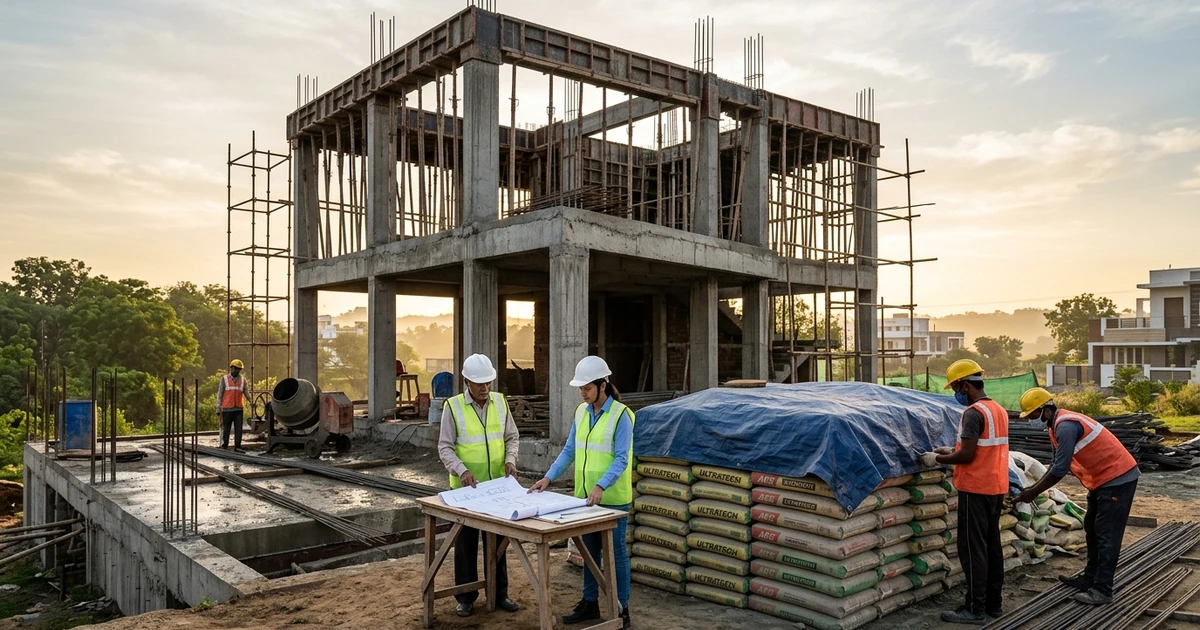
Sustainable cement is no longer only a corporate sustainability idea. For Indian home builders, it directly connects with strength, durability, seepage prevention, and long term value. A home must face heat, monsoon rain, humidity, soil variation, and everyday structural demands. This guide explains how sustainable cement supports reliable home construction, why product selection matters, and how Ambuja helps homeowners, contractors, and engineers make better building decisions through products, dealer access, and technical support.
Key Takeaways
- Sustainable cement can support durable home construction while helping reduce environmental impact.
- Indian climatic conditions make leakage resistance, weather proofing, and seepage prevention essential.
- Ambuja Cement supports builders through product choice, sustainability focus, dealer networks, and technical guidance.
Sustainable Cement for Stronger Indian Homes
Sustainable cement helps homeowners balance strength, durability, and environmental responsibility without treating sustainability as a separate concern. In Indian home construction, the right cement choice can improve concrete performance, support weather resistance, and help families build homes that remain dependable through monsoon cycles, heat, humidity, and changing site conditions.
A strong home begins with materials that suit its location and purpose. In India, one region may face coastal moisture, while another may face extreme heat or heavy rainfall. Sustainable cement supports long lasting construction by focusing on performance and responsible resource use.
Ambuja positions its cement portfolio around strength, resilience, and durability. Home builders can explore the company through the Ambuja Cement website, where corporate information, product support, sustainability updates, and customer guidance are available.
For homeowners, sustainability should not feel abstract. It can mean a denser structure, better performance, lower maintenance concerns, and a more responsible approach to home building. When cement supports both strength and environmental care, families gain confidence in their construction choices.
Why Home Construction Needs Leakage Resistance
Leakage resistance is one of the most practical concerns for Indian homeowners because water can affect walls, slabs, plaster, reinforcement, and interior comfort. Cement selection, concrete quality, curing, workmanship, and drainage all influence seepage prevention, making water focused construction planning essential from the foundation stage itself.
Many homeowners first notice construction issues after the first monsoon. Damp patches, peeling paint, corrosion marks, and efflorescence can indicate moisture movement. These problems often begin with poor material selection, weak concrete density, poor curing, or unsuitable site practices.
Products such as Ambuja Kawach and Ambuja Plus are positioned around seepage resistance, leakage resistance, and improved durability. This makes them relevant for homeowners who are building roofs, bathrooms, external walls, water exposed areas, and moisture prone structures.
Good construction also needs method discipline. Cement alone cannot solve every site issue. Contractors must follow the right water cement ratio, proper compaction, adequate curing, and sound waterproofing details where required.
Home builders should watch these areas closely:
- Roof slab concrete quality and curing.
- Bathroom and terrace waterproofing preparation.
- External plaster quality in rainfall exposed walls.
- Foundation treatment in damp soil conditions.
- Drainage planning around the home.
When these steps work together, sustainable cement can contribute to a stronger and more resilient home.
Choosing Sustainable Cement for Indian Climatic Conditions
Indian climatic conditions demand careful product selection because every home faces a different mix of heat, rain, humidity, soil exposure, and structural load. Sustainable cement should be chosen by use case, not only by brand recall, so homeowners can align product performance with foundations, slabs, masonry, plastering, and finishing needs.
A first time homeowner often asks, “Which cement is best for my home?” The practical answer depends on the application. A roof slab may need strength and leakage resistance. Plastering may need workability and finish. Heavy construction may need high strength performance. Moisture prone zones may need added protection against seepage.
Ambuja offers a range of cement and building material solutions for different needs. Ambuja Kawach focuses on water repellent properties. Ambuja Plus is positioned for enhanced strength and leakage resistance. Ambuja Compocem is promoted for finish, workability, and sustainability positioning.
Home builders can also learn from broader resilience thinking. The related blog on resilient Indian construction explains how preparedness, durable materials, and long term planning support stronger infrastructure and homes.
For selection, homeowners should discuss these questions with engineers or technical support teams:
- Is the site in a high rainfall or damp region?
- Will the structure use reinforced concrete slabs?
- Does the home need better thermal comfort?
- Is plaster finish a major priority?
- Are sustainability goals important for the project?
These questions help match cement choice with actual site needs.
Ambuja Cement and Sustainability Focus
Ambuja Cement connects sustainable cement with a wider ESG approach, including climate responsibility, resource efficiency, circular economy thinking, water stewardship, and community focus. For homeowners and construction professionals, this matters because responsible manufacturing and durable product performance together shape the future of Indian home and infrastructure development.
Sustainability in construction begins before cement reaches the site. It includes manufacturing practices, logistics, material innovation, water use, energy use, and responsible business governance. Ambuja communicates its ESG approach through dedicated sustainability sections and public reports.
Readers can explore Ambuja’s sustainability initiatives to understand how corporate commitments connect with construction choices. The company also shares information about environment, social, governance, and sustainability reports across its website.
Independent green building frameworks also show why material choices matter. The GRIHA Council promotes sustainable habitat standards in India, while the Bureau of Indian Standards provides standards that influence quality and safety expectations across sectors.
For home builders, this creates a simple principle. Choose cement and construction materials that support durability first, then pair that with responsible sourcing and efficient site practices. A sustainable home should last longer, perform better, and use resources wisely.
Home Building Guidance Beyond Cement Selection
Building a reliable home requires more than selecting cement bags. Homeowners also need budgeting support, nearby dealer access, technical guidance, product clarity, and site level quality checks. Ambuja Help and related support routes make the home building journey more guided, especially for first time builders across India.
A home project involves many decisions. Cement type, concrete mix, sand quality, curing time, slab strength, plaster finish, budget control, and dealer availability all affect the final outcome. First time home builders often need simple and trusted guidance.
Ambuja Help supports this journey through home building guidance, construction cost planning, dealer discovery, enquiries, and technical support routes. This can help homeowners plan better before buying materials or starting site work.
Ambuja also states a strong national presence, including cement capacity, integrated plants, grinding units, ready mix concrete plants, bulk terminals, and a wide channel partner network. Readers can learn more about the company profile on the about Ambuja page.
For practical planning, homeowners should follow a step by step approach:
- Estimate the construction budget before site work begins.
- Select cement based on use case and climate exposure.
- Check local product availability through authorised dealers.
- Ask engineers about mix design and curing requirements.
- Use technical support when there is product uncertainty.
This approach reduces avoidable mistakes and helps create durable construction outcomes.
Sustainable Cement and the Future of Indian Construction
Sustainable cement will play a larger role as India builds more homes, roads, rail infrastructure, commercial spaces, and urban projects. The future of construction will depend on materials that combine strength, reliability, weather proofing, and lower environmental impact while supporting both individual homeowners and large scale infrastructure buyers.
India’s construction needs are diverse. A family home in Gujarat, a farmhouse in Punjab, a residential slab in Maharashtra, and an infrastructure project in another region may all need different performance priorities. Yet every project needs reliability.
Sustainable cement supports this future by combining technical performance with responsible thinking. For homeowners, it means stronger roofs, durable walls, better seepage prevention, and reduced repair concerns. For contractors, it means consistent workability and confidence at site. For engineers and B2B buyers, it supports specification driven construction.
Ambuja’s portfolio also includes products for heavy duty construction, rail infrastructure, ready mix concrete presence, and environment friendly cement options. This broad relevance makes sustainability important across both residential and institutional construction.
The core lesson is clear. Strong construction and sustainable construction should not compete. They should work together.
Building Durable Homes With Sustainable Choices
The best home construction decisions are practical, informed, and climate aware. Sustainable cement can support strength, leakage resistance, durability, and responsible building when paired with good workmanship, proper curing, technical guidance, and reliable dealer access across India’s diverse construction environments.
Sustainable cement helps Indian homeowners think beyond immediate construction. It supports homes designed for long term resilience, especially in demanding weather conditions. Product selection, seepage prevention, sustainability, and technical support all matter when building a dependable home.
Ambuja brings together cement products, sustainability focus, dealer support, and homeowner guidance for this journey. To plan your next construction step, explore Ambuja’s official resources or contact Ambuja for the right support route. A durable home begins with informed decisions, reliable materials, and a commitment to building better for India.
Leave a Reply