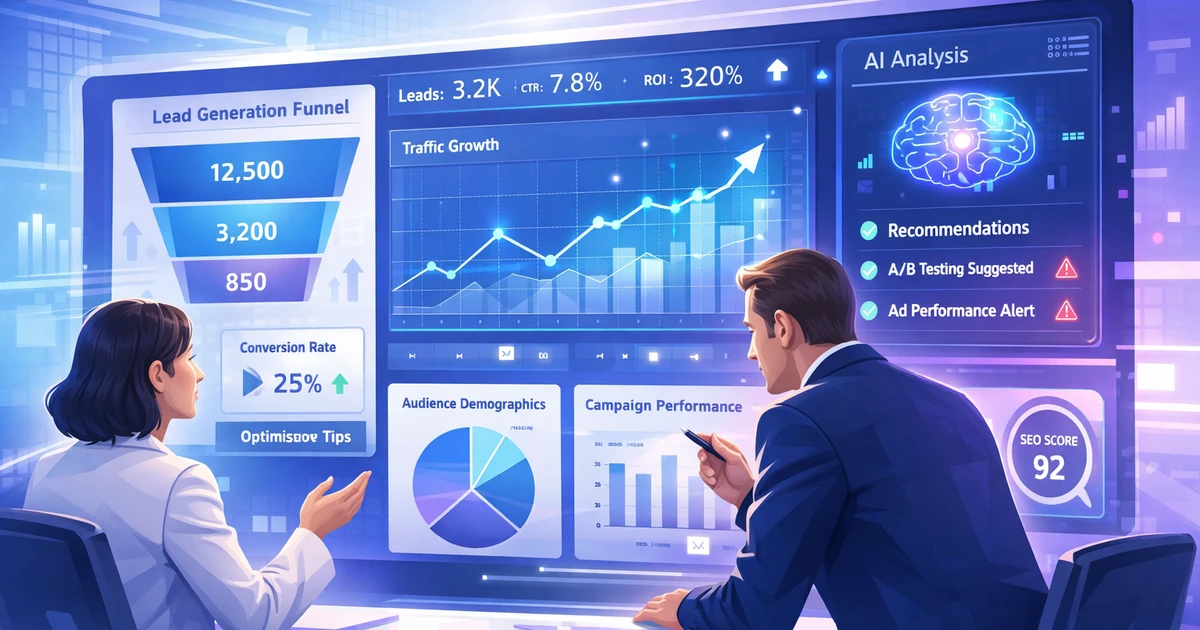
AI powered digital marketing is no longer a future concept. It is now a practical growth system for businesses that want better lead generation, faster optimization, and high quality results without wasting budget. Many business owners still rely on manual campaigns, disconnected tools, and guesswork. This guide explains how AI powered marketing helps teams build tailor made strategies, use data analytics with confidence, and improve performance across search, ads, social media, and automated follow up. For structured experimentation, read this Marketing Testing Guide for AI Powered Growth Teams.
Key Takeaways
- AI powered digital marketing helps businesses automate campaigns, improve targeting, and make better decisions using data analytics.
- Strong lead generation depends on clear strategy, quality data, continuous optimization, and tailor made execution.
- The best results come when AI supports human strategy rather than replacing it completely.
Why AI Powered Digital Marketing Matters Now
AI powered digital marketing matters because customers move quickly, platforms change often, and manual campaign management cannot keep pace with competition. Businesses need systems that learn from data analytics, identify patterns, automate repetitive work, and improve optimization across channels while still supporting strategic decisions from experienced marketers during every growth cycle and budget review.
Most marketing teams face the same challenge. They have more channels, more data, and more pressure to prove return on investment. AI helps turn this complexity into a structured process that is easier to manage and improve.
For example, an AI powered platform can review campaign performance, identify weak landing pages, suggest budget shifts, and prioritize high intent leads. That creates faster decisions and better use of marketing spend.
According to McKinsey research on AI and business value, companies are increasingly using AI to improve operations, marketing, and customer engagement. For growth teams, this means AI is becoming a core advantage rather than an optional tool.
How AI Powered Digital Marketing Improves Targeting
AI powered digital marketing improves targeting by analyzing customer behavior, campaign history, search intent, and engagement patterns faster than a manual team can. It helps businesses understand who is ready to act, what message they need, and which channel should receive more focus for efficient lead generation and stronger conversion performance.
Better targeting starts with better signals. AI can compare past conversions with current campaign activity to identify audience groups that are more likely to become customers.
This matters because broad targeting often wastes budget. A business may attract many clicks, but only a small share may match its ideal buyer profile. AI powered targeting helps refine audiences, personalize messages, and improve optimization without adding extra manual work.
Building a Tailor Made AI Marketing Strategy
A tailor made AI marketing strategy starts with business goals, audience behavior, and channel performance instead of generic templates. AI can process data analytics quickly, but the real value comes from connecting that insight to customer intent, campaign messaging, budget allocation, and lead generation priorities that match your business model closely.
A strong strategy begins with clear goals. Do you want more demo bookings, higher quality leads, better local visibility, or lower acquisition costs? Each goal needs a different mix of channels, content, and metrics.
AI powered systems can support this process by analyzing:
- Search demand and keyword opportunities
- Paid ad performance and budget waste
- Social media engagement patterns
- Lead quality by source
- Conversion paths across the funnel
This makes strategy more precise. Instead of running the same campaign for every audience, you can create tailor made messaging for each segment. A real estate business, a healthcare clinic, and a business software company should not use the same marketing workflow.
Leadmetrics focuses on AI powered marketing strategies that connect planning, execution, and optimization. You can explore its approach to tailor made digital marketing strategies for businesses that need more efficient growth.
Using Data Analytics for Better Lead Generation
Data analytics improves lead generation by showing which channels bring qualified prospects, which messages create action, and which touchpoints slow conversion. AI powered tools can study behavior at scale, score opportunities, and help marketing teams focus on leads that are more likely to become customers through smarter follow up and qualification.
Lead generation becomes expensive when teams chase every contact equally. AI makes the process more efficient by identifying signals that show intent.
These signals may include:
- Repeated visits to pricing or service pages
- Form submissions from target industries
- Engagement with case studies or product pages
- Search queries with commercial intent
- Fast response to email or remarketing campaigns
For example, a business may receive 300 monthly leads, but only 40 are sales ready. AI lead scoring can help rank those leads, so sales teams spend time where it matters most.
HubSpot notes that marketing automation improves efficiency by helping teams manage campaigns, personalize communication, and track performance. When combined with AI, this creates stronger follow up and better qualification.
AI Powered Digital Marketing Metrics to Track
AI powered digital marketing works best when teams measure qualified leads, conversion rate, cost per acquisition, landing page performance, and revenue influence. These metrics show whether campaigns are producing high quality results, not just traffic. Clear reporting also helps business owners decide which channels deserve more investment and which need optimization.
The best dashboards show both activity and outcomes. Traffic, impressions, and clicks matter, but they do not tell the full story. A campaign should also be judged by lead quality, sales readiness, follow up speed, and revenue impact.
Leadmetrics also covers practical acquisition in its guide to AI lead generation for businesses. It is useful for business owners who want a clear view of automated lead generation and qualification.
Optimization Across Search Ads and Social Media
Optimization works best when every channel shares insight instead of operating alone. AI powered digital marketing connects search behavior, advertising data, social engagement, and conversion metrics, helping businesses improve campaign performance through faster testing, smarter targeting, and continuous refinement across the complete customer journey from discovery to sales and retention too.
Optimization is not a one time task. Search rankings shift. Ad costs change. Customer expectations evolve. AI helps businesses respond faster and avoid decisions based only on assumptions.
In search engine optimization, AI can help identify keyword gaps, content opportunities, and technical issues. In paid ads, it can detect budget waste and suggest audience changes. In social media, it can analyze engagement patterns and recommend better posting themes.
A practical optimization workflow may look like this:
- Review traffic, lead quality, and conversion data.
- Identify weak pages or campaigns.
- Test new copy, offers, or audiences.
- Measure results against baseline performance.
- Scale the version that delivers high quality results.
Businesses that rely on organic growth should review Leadmetrics’ AI search engine optimization features. Teams focused on paid acquisition can also explore performance testing through the Marketing Test Guide for AI Powered Growth Teams.
Choosing the Right AI Marketing Platform
The right AI marketing platform should combine automation, strategy, reporting, and optimization in one practical system. Business owners should look for tools that support lead generation, provide clear data analytics, create tailor made workflows, and show how each action contributes to measurable growth without adding complexity for busy teams daily operations.
Not every AI tool delivers business value. Some tools only generate content. Others only report data. A strong platform should help with planning, execution, and improvement.
AI Powered Marketing Platform Checklist
An AI powered marketing platform should make daily execution easier while giving leaders better visibility into performance. Look for campaign recommendations, lead scoring, automated follow up support, clear dashboards, search and ad optimization, custom strategy, transparent reporting, and collaboration features that connect marketing activity with sales priorities.
The most useful AI platforms do not hide behind complexity. They show what is working, what needs improvement, and what action should happen next.
Avoid these common mistakes when choosing or using AI marketing tools:
- Launching campaigns without clear conversion goals
- Using poor quality customer data
- Measuring vanity metrics instead of qualified leads
- Ignoring landing page performance
- Automating follow up without personalization
- Failing to review campaign insights regularly
For example, a campaign may produce many clicks but few qualified leads. AI can reveal the issue, but your team still needs to adjust the offer, page, audience, or message.
A simple rule helps. Let AI handle speed, pattern recognition, and repetitive work. Let your strategy team handle positioning, customer insight, and business priorities.
Conclusion
AI powered digital marketing gives business owners and marketing professionals a smarter way to improve lead generation, data analytics, and optimization. It helps teams move beyond guesswork and build tailor made campaigns that produce high quality results. The strongest outcomes come from combining AI automation with clear goals, clean data, and regular performance review. If your business wants a more efficient growth system, explore Leadmetrics’ AI powered marketing features or book a demo to see how intelligent optimization can support your next stage of growth.
Leave a Reply