Category: Uncategorized

  • Testing Premium Android Phones Before You Buy

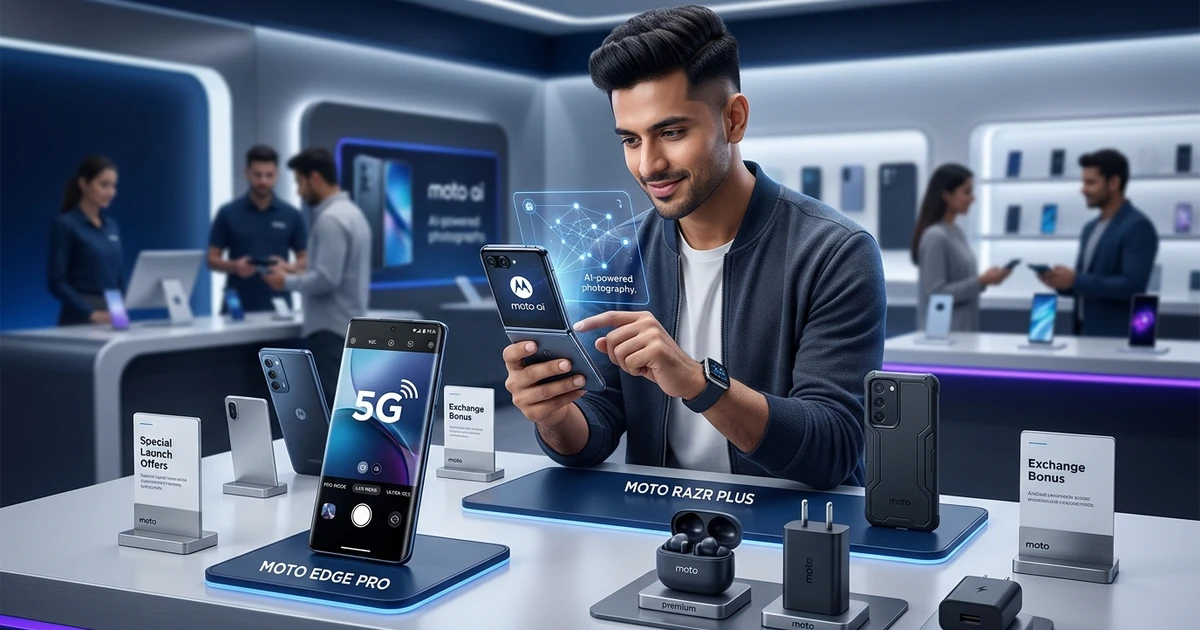
    testing a smartphone before you buy can turn confusion into confidence. When you compare the latest motorola phones, practical testing shows what matters most. It connects camera clarity, battery stamina, durability, design, moto ai, and premium 5G performance to real use. This guide explains a simple approach for Indian buyers who want a capable Android smartphone without guesswork. Use it while exploring latest motorola smartphones, comparing phone families, or shortlisting a flip phone, Edge device, or Moto G model.

    Key takeaways

    • testing helps you judge a smartphone by daily needs, not only headline specifications.
    • Premium 5G Android phones need checks for camera, battery, display, durability, offers, and software.
    • The best Motorola experience comes from matching your lifestyle with the right phone family and accessories.

    Why testing Matters for Premium 5G Android Phones

    Smartphone buyers often compare storage, camera numbers, refresh rates, and offers. Real value appears when those features support daily use. testing brings clarity by connecting technical claims with personal habits, whether you shoot reels, travel often, play games, attend calls, or want a premium design that feels reliable every day.

    testing starts with one question. How will this phone fit your life?

    A photographer may prioritise camera consistency. A content creator may need storage, display brightness, audio support, and fast sharing. An all rounder may want battery, durability, 5G, and a clean Android experience.

    For many Indian buyers, the decision also includes price and sale offers. Long term usability matters too. That is why a structured checklist works better than a quick specification scan. It helps you compare the motorola Edge family, Moto G models, and Razr phones with purpose.

    When checking Android features, review official Android information for platform capabilities. Then compare how each motorola phone brings those capabilities into the Motorola experience.

    Testing the Camera for Photos, Video, and Creators

    Camera testing should go beyond megapixels because everyday photography depends on focus, colour, stabilisation, zoom, low light output, and reaction speed. A strong Motorola camera phone should help you capture people, food, travel, documents, and social content with minimal effort across different lighting conditions.

    Start with daylight images. Check skin tones, natural colours, edge detail, and bright skies. Then try indoor photos under warm lights. Many phones look strong outdoors. Real testing shows performance inside homes, cafes, offices, and evening spaces.

    Next, test video. Move slowly while recording and check whether footage stays steady. For content creators, also check front camera clarity, microphone quality, and focus speed. If a product page mentions AI zoom, periscope lens capability, Sony sensor positioning, or DXO related claims, review them against your actual needs.

    Camera testing checklist

    Use this simple camera checklist:

    • Take one portrait in daylight.
    • Take one indoor shot under mixed lighting.
    • Record a walking video.
    • Try zoom at practical distances.
    • Check front camera video for social content.
    • Review images on the phone display and another screen.

    If camera is your main priority, compare premium options across motorola Edge phones. These models often focus on design, camera, 5G, and performance led messaging.

    Testing Battery, Charging, and Everyday Reliability

    Battery testing is not only about size because software tuning, display use, 5G activity, charging habits, and background apps affect daily endurance. A dependable Android phone should carry you through calls, maps, video, photos, payments, and entertainment without making you plan your day around charging.

    A simple battery test begins with your routine. Stream video for fifteen minutes. Open maps, browse social apps, capture photos, and make a short video call. Watch how much battery drops during each task. This gives a clearer view than battery capacity alone.

    Also check charging support and product page details. Some motorola products highlight TurboPower charging accessories. Certain devices promote large battery capacity and practical charging speeds. Confirm compatibility before buying accessories.

    Durability matters too. A phone that lasts through a long day should feel secure in hand. Review material finish, grip, button feedback, port placement, and stated water or dust resistance details. For product safety and standards context in India, buyers can refer to the Bureau of Indian Standards.

    Value conscious 5G buyers should explore the Moto G family. Battery, durability, offers, and everyday Android performance are often central to this buying journey.

    Testing Design, Flip Experience, and Motorola Feel

    Design testing is about more than appearance because the best phone should feel natural each time you unlock it, fold it, carry it, and use it in public. Premium buyers should check hand feel, weight balance, display comfort, hinge experience for flip phones, and whether the device matches their style.

    A premium phone must feel comfortable before it feels impressive. Hold it for a few minutes. Try one hand typing. Open the camera quickly. Switch between apps. Check whether the display is easy to view. Also see whether the design supports your pace.

    For flip and foldable buyers, testing should include the hinge and external display utility. Pocketability matters too. Check how quickly the phone moves from closed to active use. The motorola Razr family is built for buyers who want a distinctive flip design with a premium Android experience.

    Also test software feel. Look for smooth navigation, quick settings, and moto ai features where available. Check connected experiences such as Ready For on supported devices. A phone should feel fast beyond the first minute. It should stay smooth through repeated tasks.

    Design focused testing should answer these questions:

    • Does the phone feel premium in hand?
    • Is the display comfortable for long reading?
    • Can you unlock and open apps quickly?
    • Does the flip form feel practical for your routine?
    • Does the Motorola experience feel clean and useful?

    If the answer is yes across your main needs, the phone is more than stylish. It is ready for your day.

    Testing Offers, Accessories, and the Complete Ecosystem

    Buying a smartphone is often the start of a wider device experience, especially when accessories, audio, charging, tablets, laptops, and offers can improve daily use. testing the full ecosystem helps you understand whether a motorola device can support entertainment, productivity, travel, fitness, and content creation beyond the phone itself.

    Offers can change the final value of a phone. Check sale pricing, bank discounts, exchange options, no cost EMI details, and terms before purchase. The best deal is not always the lowest listed price. It is the right mix of phone, warranty confidence, payment comfort, and useful accessories.

    Accessories complete your motorola experience. If you create content, you may need Moto Buds for audio monitoring. If you travel often, a TurboPower charger can be useful. If you want a connected lifestyle, explore motorola accessories, watches, buds, and charging options.

    Testing the ecosystem also means checking support. Review order tracking, repair status options, and product support before buying. This makes the purchase feel more reliable, especially for premium 5G Android phones.

    Ecosystem testing checklist

    A smart ecosystem checklist includes:

    • Confirm the right charger support.
    • Match earbuds with your calling and content needs.
    • Check tablet or laptop options if you need productivity.
    • Review current offers and terms.
    • Keep support and repair status links handy.

    Final Thoughts on Testing Your Next Motorola Phone

    testing gives every buyer a sharper way to choose between latest phones, premium models, flip designs, and value focused Android options. Instead of relying only on specifications, it helps you connect camera, battery, durability, design, moto ai, offers, and accessories with the way you actually live, work, travel, and create.

    testing should be simple, practical, and personal. Start with the camera. Then check battery, charging, design, software, durability, and ecosystem fit. Compare the phone family that matches your lifestyle. You may want a premium Edge device, a stylish Razr flip phone, or a value focused Moto G smartphone. For a confident next step, explore motorola India, review current offers, and choose the Android phone that delivers the Motorola experience every day.

  • Motorola Flip Phones India: Razr Premium Android Experience

    Motorola flip phones India are back in the premium smartphone conversation for a clear reason. Buyers want more than another standard glass slab. They want design, compact convenience, premium 5G performance, Android flexibility, camera confidence, and a phone that feels personal.

    The Motorola Razr line brings that attitude into a modern flip format. This guide helps you evaluate Razr as a premium android flip phone, compare key features, understand online buying benefits, and decide whether this is the right Motorola experience for you. You can also Explore Motorola Razr flip phones directly on the official Motorola India store.

    Key Takeaways

    1. Motorola Razr is positioned as a premium flip Android smartphone for buyers who value design, portability, 5G, camera, and style led ownership.
    2. Interest in foldable and flip phones continues to grow, supported by market coverage from sources such as Counterpoint Research and IDC.
    3. The official Motorola India store helps shoppers check current INR pricing, offers, colour options, product availability, and support access before buying.

    Why Motorola Flip Phones India Are Back in Premium Demand

    Modern flip phones are no longer basic nostalgia devices. They are premium Android smartphones built for compact carry, expressive design, cover screen convenience, and immersive unfolded use. For Indian buyers, Motorola flip phones India offer a distinctive alternative to traditional phones, especially when design identity matters as much as performance.

    Flip phones are returning because premium buyers are changing what they expect from a smartphone. Performance still matters, but design identity matters too. A flip phone can sit neatly in a pocket, open into a full Android screen, and look different in every social setting.

    Instead of relying on unverified keyword volume figures, it is safer to look at broader category signals. Counterpoint Research analysis of foldable smartphone shipments shows that foldable devices remain an active premium category worldwide. The IDC smartphone market tracker also reflects how global smartphone demand is closely watched by format, pricing, and product innovation.

    For India, the commercial signal is clear. Premium buyers are exploring phones that combine technology with personality. If you are comparing the latest Motorola Android phones, Razr stands out because it starts with a different design philosophy.

    What Makes Motorola Razr a Premium Android Flip Phone?

    Motorola Razr is the brand’s premium flip and foldable Android line, built around stylish portability, a latest Android experience, premium 5G expectations, camera features, battery considerations, and a bold design that feels stunning inside out. It is made for buyers who want a smartphone that looks premium before the screen even turns on.

    The Razr line is for buyers who want a smartphone that reflects style and intent. It is compact when closed, expansive when opened, and made for people who want their device to match their lifestyle.

    On the official Motorola India Razr listing, current models shown include motorola razr 50 ultra and motorola razr 50. Prices, colours, storage variants, offers, and availability can change, so shoppers should always check the live store before purchase.

    Motorola Flip Phones India Design and Cover Screen

    The flip form factor gives Razr its strongest identity. Motorola flip phones India are easier to carry, expressive to use, and more visually distinctive than traditional smartphones. The cover display can also support quick actions, letting users check alerts, preview selfies, manage music, and view calls without opening the phone every time.

    A Razr can fold into a compact profile for commuting, travel, meetings, and nights out. Open it, and it becomes a full Android smartphone for browsing, streaming, messaging, productivity, and content.

    This is where design becomes practical. A compact folded body helps when you want less bulk. An unfolded screen helps when you want more space. That balance is why Motorola flip phones India appeal to both style focused users and serious Android buyers.

    Cover display convenience also matters. Use cases may include checking notifications during travel, previewing selfies before capture, managing music while walking, and viewing incoming calls. Exact cover display size, app support, and controls depend on the current Razr model, so verify these details on the live Motorola India product page.

    Motorola Flip Phones India Performance Checks

    A premium flip phone still needs strong performance. Motorola flip phones India should be evaluated for processor, RAM, storage, Android version, refresh rate, 5G support, camera features, battery capacity, and software experience. Design attracts attention, but consistent performance keeps the phone feeling premium through daily use.

    Premium smartphone buyers use their phones for multitasking, video, gaming, work calls, banking, streaming, and social content. That is why Razr should be evaluated like any other premium Android phone.

    Check chipset, RAM, storage, display refresh rate, and software features before buying. Motorola’s Razr product pages mention experiences such as moto ai on supported models, but exact features can vary by device. For broader Android context, the official Android site explains the platform ecosystem that powers modern Android phones.

    Motorola Razr Fold vs Traditional Smartphones: Who Is It For?

    Users searching for Motorola Razr fold often compare foldable formats with traditional smartphones. Razr is best understood as a premium flip Android phone for buyers who want portability, standout design, and a differentiated Motorola experience. Traditional phones remain familiar, while Razr adds compactness, personality, and a more expressive ownership style.

    A traditional smartphone has one fixed shape and one main screen. A flip phone changes that relationship. It gives you a compact folded device and a larger opened experience.

    The buyer mindset is also different. Traditional premium buyers often prioritise familiar display size, camera systems, performance, and battery. Razr buyers want those factors too, but they also want design impact.

    Design conscious users may care about colour, finish, texture, compact profile, and the act of flipping the phone open. If your phone is always in your hand, it becomes part of your visual identity. Razr fits users who want their device to look deliberate, modern, and distinctive.

    Premium Android buyers should also look beyond appearance. Android flexibility, Google app access, moto ai, Ready For, camera, battery, and durability all influence long term satisfaction. If you prefer a traditional flagship style format, the Motorola Edge premium 5G phones family may be a better fit.

    Content creators and social first users should also consider Razr. Flip design can support hands free framing, selfies, short videos, desk based recording, and creative angles, depending on the camera and software features of the model. The camera remains a major factor, so check rear camera details, selfie camera, video features, stabilisation, AI camera tools, and low light claims on the official product page.

    Key Features to Compare Before Buying a Premium Android Flip Phone

    The best flip phones should be compared on display, foldable design, cover screen, camera, battery, performance, storage, 5G, price, and offers. This practical checklist helps Indian buyers make a confident online purchase and choose the right premium android flip phone for daily work, travel, entertainment, and content creation.

    A premium flip phone is a style choice, but it is still a serious smartphone purchase. The right comparison prevents disappointment and helps you match the phone to your daily routine.

    Use this buying framework before choosing any Motorola Razr fold or flip model:

    1. Display and foldable design: Compare inner screen size, cover screen size, brightness, refresh rate, hinge design, materials, and stated durability details.
    2. Camera experience: Compare rear camera, selfie camera, AI features, video tools, low light support, and content creation flexibility.
    3. Battery and charging: Check battery capacity, charging speed, charger details, and supported charging standards.
    4. Performance and storage: Review processor, RAM, storage options, Android version, 5G support, refresh rate, and software features.
    5. Offers and price: Check current INR pricing, discounts, bank offers, colour options, storage variants, stock status, and checkout terms.

    Motorola India shows INR pricing and product offers on its ecommerce storefront. Before buying, review current Motorola smartphone offers, product availability, and terms before checkout.

    If you want a value focused Android 5G phone instead of a premium flip format, explore Moto G 5G phones. This helps you compare design ambition against practical budget priorities.

    Why Buy Motorola Flip Phones from the Official Motorola India Store?

    The official Motorola India store gives buyers direct access to current product listings, official pricing, offers, variants, cart flow, login, orders, Track Order, Repair Status, and support pathways. For a premium purchase, that direct buying environment helps shoppers review the latest information before making a confident online decision.

    Buying a premium smartphone online requires trust. The official store helps because it shows the latest listings, current INR prices, available variants, and direct purchase actions such as Buy Now or Shop Now.

    Motorola also brings strong heritage. The brand states it has been moving the industry forward since 1928. That legacy adds context to Razr, a line built around bold mobile design and modern Android innovation. You can read more about the brand through the official Motorola India brand page.

    The official store also connects shoppers to support related paths such as orders, repair status, and customer support. Warranty terms can vary, so always check the relevant product and support pages before purchase.

    Motorola Razr and the Complete Motorola Experience

    Razr is not only a phone purchase. It can connect with accessories and software features that complete your motorola experience, including Moto Buds, Moto Watch, TurboPower chargers, Ready For, and moto ai where supported. The right accessories can make the premium smartphone experience feel more connected and personal.

    A premium phone feels better when the ecosystem supports your routine. Moto Buds can support music and calls. Moto Watch can support connected lifestyle use. TurboPower chargers can support charging needs when compatible.

    Software experiences also matter. Moto ai can support smarter experiences on eligible devices. Ready For can help extend productivity on supported Motorola phones.

    To build a wider setup, explore accessories that complete your motorola experience. If charging is a priority, review compatible Motorola power and charging accessories before buying.

    Is a Motorola Razr Right for You?

    Razr is ideal for buyers who want a premium flip Android smartphone with standout design. Another Motorola family may suit you better if you prefer a traditional flagship format, a value focused 5G phone, or a simpler smartphone shape without foldable design considerations.

    Choose a Motorola Razr if you want:

    1. A premium flip Android smartphone.
    2. A compact design with flagship style personality.
    3. A phone that blends design, 5G, camera, battery, and daily performance.
    4. A distinctive alternative to standard premium smartphones.
    5. A modern Motorola experience with bold visual identity.

    Consider another Motorola phone if you want:

    1. A traditional premium 5G smartphone experience from the Edge family.
    2. A value focused Android 5G phone from the Moto G family.
    3. A wider look at Motorola phones across price points and formats.
    4. A simpler phone format without foldable design considerations.

    The best choice depends on your daily habits. If design and portability excite you, Razr deserves attention. If you prefer a standard format, Edge or Moto G may fit better.

    FAQs About Motorola Flip Phones in India

    These quick answers help buyers compare Motorola flip phones India, understand Razr positioning, review key buying checks, and choose where to shop online with confidence. They also answer common questions around premium Android flip phones, Motorola Razr fold searches, content creation, camera use, battery expectations, and official India purchase options.

    Motorola Flip Phones India Availability

    Shoppers often want to know which Razr models are currently available before comparing price, colours, storage, and offers. Motorola flip phones India availability can change by stock, launch cycle, and promotion period, so the official Motorola India Razr page should be treated as the most reliable shopping reference.

    The official Motorola India Razr family page currently shows models such as motorola razr 50 ultra and motorola razr 50. Older Razr models may also appear depending on listing status. Always check the live product page for current availability, pricing, colours, storage, and offers.

    Motorola Flip Phones India Buying Questions

    Before buying a premium flip smartphone, compare the complete experience rather than only the design. Buyers should check display, hinge details, durability information, cover screen, camera, battery, charging, processor, RAM, storage, Android version, price, offers, and official support access for post purchase confidence.

    Yes, Motorola Razr is positioned as a premium Android flip phone. It focuses on premium design, compact portability, premium 5G expectations, camera use cases, Android flexibility, and a distinctive Motorola experience.

    You can buy or explore Razr on the official Motorola India website. Visit the Motorola Razr family page to check current models, prices, variants, and Buy Now options.

    Modern flip phones can also be useful for creators because the design may support selfies, hands free framing, short videos, and creative angles. The final experience depends on the exact camera hardware, software features, and display tools of the chosen model.

    Final Verdict: Explore Razr for Premium Android Design

    Motorola Razr is for buyers who want their next phone to feel premium, compact, expressive, and different. It combines flip design with Android usability, 5G expectations, camera focused use cases, official India offers, and the wider Motorola ecosystem for a more complete smartphone ownership experience.

    Motorola flip phones India are no longer just about nostalgia. Razr brings the flip format into the premium Android era with strong design identity, everyday smartphone capability, and official India store convenience.

    If you want a phone that stands out in your hand and still supports your digital life, Razr is worth exploring. Discover the latest Motorola Razr flip phones in India, compare current offers, and shop your premium Android flip smartphone from the official Motorola India store. Explore Razr. Shop Now.

  • Pooja AI Digital Marketing Guide for Lead Generation

    Pooja AI Digital Marketing Guide for Lead Generation

    AI Digital Marketing is changing how businesses attract, engage, and convert customers. Many teams still manage SEO, paid ads, social media, maps, content, and reporting through separate tools. That creates delays, wasted spend, and unclear ROI. This guide explains how AI can bring strategy, execution, automation, and performance analysis into one practical workflow. You will learn how AI powered software improves lead generation, reduces manual work, and helps decision makers optimize digital marketing with better data.

    Key Takeaways

    1. AI Digital Marketing helps businesses automate campaigns, improve targeting, and convert more qualified leads.
    2. The biggest value comes from connecting SEO, paid media, social media, maps, AI search, CRM, and reporting.
    3. A unified AI powered platform can help business owners track ROI and reduce marketing waste across channels.

    Why AI Digital Marketing Matters Now

    AI Digital Marketing matters because buyers now discover brands across search engines, social platforms, maps, ads, and AI answer engines. Businesses need faster execution, better data, and stronger optimization to stay visible. AI helps marketing teams act on signals from multiple channels and turn fragmented activity into measurable lead generation outcomes.

    A CEO may ask a simple question: “Which digital marketing activity created our best leads this month?” In many businesses, the answer is hard to find. SEO data sits in one place, paid media data in another, and lead details often live inside spreadsheets or disconnected CRM tools.

    AI changes this by connecting campaign activity with business outcomes. It can identify which keywords, locations, audiences, landing pages, and content formats create qualified leads. It can also recommend changes faster than manual analysis.

    This is especially important as search behaviour changes. People now use Google, Bing, ChatGPT, Gemini, Meta AI, and other AI assistants to research products and services. If your business is not optimized for both traditional search and AI search, you may lose visibility before customers reach your website.

    Research from McKinsey Global Institute shows that generative AI can create major productivity gains across business functions, including marketing and sales. For business owners, that means AI is no longer only a content tool. It is becoming a growth system.

    Leadmetrics AI positions this shift around practical execution. Its AI powered software supports SEO, paid ads, maps optimization, social media, AI search optimization, CRM workflows, and ROI analysis. You can explore the broader platform through its AI powered digital marketing software page.

    How AI Digital Marketing Improves Lead Generation

    AI improves lead generation by combining audience insights, campaign automation, landing page optimization, and CRM tracking. Instead of only increasing traffic, it helps businesses understand which users are most likely to convert. This allows marketing teams to focus budget, content, and follow up efforts on leads with stronger commercial intent.

    Lead generation fails when campaigns attract attention but not intent. A high traffic blog post, social campaign, or ad may look successful, but it only matters if it creates inquiries, calls, demo requests, or qualified sales conversations.

    AI Digital Marketing improves this process in four ways.

    1. It studies user intent across search, ads, social media, and website behaviour.
    2. It helps create tailored content for each stage of the buyer journey.
    3. It supports campaign optimization based on lead quality, not only clicks.
    4. It connects marketing activity to CRM records and ROI reports.

    For example, a real estate business may receive many paid ad inquiries, but only some users are ready to book a site visit. AI can help identify the best performing keywords, audience segments, locations, and landing pages. The team can then shift budget toward campaigns that generate stronger buyer intent.

    The same approach works for healthcare, education, retail, financial services, construction, tourism, logistics, and SaaS businesses. Each sector has a different customer journey, but the goal remains the same: attract the right audience and convert them into measurable leads.

    Leadmetrics AI also connects lead generation with performance analysis. Its approach helps decision makers understand cost, channel contribution, and ROI. You can read more in this related guide on AI lead generation for businesses.

    A strong lead generation workflow should answer these questions:

    1. Which channel created the lead?
    2. Which campaign influenced the inquiry?
    3. Which content or landing page supported conversion?
    4. What was the cost per qualified lead?
    5. Which leads moved forward in the sales pipeline?

    When these answers are visible, marketing becomes more predictable.

    AI Digital Marketing Channels to Optimize First

    The best AI Digital Marketing results come from optimizing high impact channels first. Most businesses should begin with SEO, paid media, social media, maps, and AI search because these channels influence discovery and demand generation. Once connected, they create a stronger path from visibility to inquiry, follow up, and revenue tracking.

    Businesses often try to improve everything at once. That usually creates scattered effort. A better approach is to prioritize channels that directly affect digital visibility and lead generation.

    Start with these areas.

    1. Search engine optimization

    SEO builds long term visibility. AI can support keyword research, content planning, technical recommendations, internal linking, and performance monitoring. It can also identify content gaps that competitors already rank for.

    Leadmetrics offers AI driven search engine optimization to help businesses improve organic discoverability across Google and Bing.

    1. AI search optimization

    AI assistants are becoming discovery platforms. Customers may ask ChatGPT, Gemini, or Bing Copilot for recommendations before visiting a website. This creates a new optimization challenge.

    AI search optimization focuses on structured content, clear entity signals, conversational answers, and trusted digital presence. The goal is to make your business easier for AI systems to understand and reference. Leadmetrics explains this through its AI search optimization feature.

    1. Paid media optimization

    Paid ads can generate leads quickly, but they can also waste budget quickly. AI helps analyze search terms, audiences, creatives, placements, and conversion patterns. This improves budget allocation and reduces spend on low quality clicks.

    For example, a clinic may discover that certain location based campaigns produce patient inquiries at a lower cost. AI can recommend shifting more budget into those campaigns while reducing weak segments.

    1. Maps and local visibility

    Maps optimization is essential for local businesses, healthcare providers, real estate offices, restaurants, education centres, and service companies. AI can help improve Google Business Profile content, location signals, reviews, categories, and local search relevance.

    1. Social media optimization

    Social media supports trust, recall, and engagement. AI can help generate content ideas, schedule posts, monitor performance, and align messaging with search and paid media campaigns.

    According to Think with Google, AI and automation can help marketers respond faster to customer signals. This is valuable because customer journeys are no longer linear. A buyer may see a social post, search your brand, check maps, compare reviews, and then submit a lead form.

    The winning strategy is not one channel. It is connected optimization.

    Building a Data Driven Digital Marketing Workflow

    A data driven digital marketing workflow connects planning, execution, optimization, and reporting. AI makes this workflow faster by turning campaign data into actions. Instead of reviewing reports after the month ends, teams can make timely improvements across content, ads, social media, maps, and lead management.

    The most effective AI Digital Marketing workflows follow a clear sequence. They do not treat AI as a random content generator. They use AI to improve the full marketing system.

    A practical workflow looks like this.

    1. Audit current digital presence

    Review SEO performance, paid media results, social activity, maps visibility, website conversions, lead sources, and CRM data. This creates the baseline for optimization.

    Leadmetrics offers a digital audit pathway through its marketing audit page.

    1. Build an AI assisted strategy

    Use business goals, audience data, location focus, competition, and channel performance to create a custom strategy. This strategy should define what to improve first and how success will be measured.

    1. Execute across connected channels

    Publish SEO content, optimize ads, improve maps listings, schedule social media, enhance landing pages, and prepare AI search friendly content. The goal is consistent digital presence across every discovery point.

    1. Capture and classify leads

    Every lead should be tracked by source, campaign, page, and intent. A mini CRM or connected CRM helps sales teams follow up faster and more accurately.

    1. Analyze ROI and optimize

    Use performance reports to identify what created qualified leads. Then adjust budget, messaging, content, and landing pages based on real outcomes.

    This workflow helps founders, CTOs, IT directors, entrepreneurs, and business owners make better decisions. It also reduces dependence on guesswork. Instead of asking whether marketing is working, teams can see which activities create measurable value.

    Businesses should also avoid one common mistake. Do not measure AI only by speed. Faster content, faster ads, or faster posts are useful, but speed without strategy creates noise. The real benefit comes from better targeting, better automation, and better ROI visibility.

    Leadmetrics AI supports this broader view by combining marketing automation, performance analysis, CRM integration, and campaign optimization in one SaaS delivered platform.

    Choosing AI Digital Marketing Software for ROI

    The right AI Digital Marketing software should connect strategy, execution, automation, and reporting in one platform. Business owners should look beyond content creation and evaluate whether the tool improves qualified leads, saves time, reduces marketing costs, supports multiple channels, and gives decision makers clear ROI visibility.

    Many AI tools solve one small problem. Some write captions. Some generate ad copy. Some analyze search keywords. These tools can help, but they do not solve the larger marketing challenge.

    A business needs connected execution. Before choosing a platform, ask these questions.

    1. Does it support SEO, paid media, social media, maps, and AI search?
    2. Can it help create and optimize digital marketing strategies?
    3. Does it connect campaigns with lead generation and CRM tracking?
    4. Can it show cost, performance, and ROI in one reporting view?
    5. Does it support automation without losing business control?
    6. Can it work for your industry and location?
    7. Does it improve both visibility and conversion?

    Leadmetrics AI is built for businesses that want more than isolated tools. It supports multi channel optimization, marketing automation, lead tracking, and reporting. This helps teams reduce manual work and make data driven decisions.

    For example, a mid market company may run Google Ads, LinkedIn campaigns, SEO content, social media posts, and local visibility work at the same time. Without a unified platform, reporting becomes slow and fragmented. With AI powered software, leaders can compare channel performance and allocate budget based on lead quality.

    Businesses evaluating software should also review proof of execution. Case studies can show how digital marketing strategies work in real situations. You can explore Leadmetrics customer stories through its case studies section.

    A useful buying principle is simple: choose software that connects marketing activity to business outcomes. If a tool saves time but cannot improve lead quality, reporting, or ROI decisions, its value is limited.

    Conclusion

    AI Digital Marketing gives businesses a smarter way to manage digital visibility, media performance, automation, lead generation, and ROI. The strongest results come from connected workflows across SEO, paid ads, social media, maps, AI search, CRM, and performance analysis. For CEOs, CTOs, IT directors, entrepreneurs, and business owners, the goal is not only faster marketing. The goal is better decisions and more qualified leads. If your team wants to reduce manual work and improve measurable outcomes, you can book a demo with Leadmetrics AI.

  • Marketing Testing Guide for AI-Powered Growth Teams

    Marketing Testing Guide for AI-Powered Growth Teams

    Marketing testing is how modern teams stop guessing and start improving. If your campaigns generate traffic but not enough qualified leads, testing gives you a clear path to better decisions. It shows what works, what fails, and where optimization can create high-quality results. For business owners and marketing professionals, the goal is simple. Use data analytics, AI-powered insights, and structured experiments to improve lead generation without wasting budget. If you are building a practical foundation, start with this AI Powered Digital Marketing Test Guide for Growth.

    Key Takeaways

    • Marketing testing helps teams validate campaign ideas before scaling spend.
    • AI-powered data analytics makes testing faster, more accurate, and easier to prioritize.
    • The best results come from testing one clear variable, measuring the right metric, and applying insights across future campaigns.

    Why Marketing Testing Matters for Growth

    Marketing testing gives every campaign a learning system, helping teams compare ideas, reduce wasted spend, and find the messages, channels, and offers that create stronger lead generation outcomes. It turns digital marketing from guesswork into an optimization process built around evidence, audience behaviour, reliable tracking, and measurable business results over time.

    Many businesses launch campaigns based on instinct. They choose a headline, audience, offer, or landing page because it feels right. Sometimes it works, but often it creates uneven results.

    Marketing testing improves this process. It helps teams compare two or more campaign variations and measure which one performs better. For example, a company might test two landing page headlines. One focuses on saving time, while the other focuses on improving revenue. The winning version tells the team what the audience values more.

    This matters because digital marketing has too many moving parts for guesswork. Ads, emails, landing pages, forms, and calls to action all influence conversion rate optimization. Without structured testing, teams may spend more without knowing why leads improve or decline.

    The data supports this approach. McKinsey research on personalization found that companies growing faster generate 40 percent more revenue from personalization than slower growing peers. Testing helps teams discover which tailored messages and offers create that advantage.

    AI-powered marketing teams gain even more value from testing. AI can process campaign data quickly, but it still needs clear inputs. When your test is structured well, AI tools can identify patterns, improve targeting, and support campaign optimization faster.

    Marketing testing for lead generation

    Marketing testing for lead generation focuses on campaign elements that directly influence how prospects become qualified opportunities. Instead of judging success by clicks alone, teams review form completions, booked calls, cost per qualified lead, and sales fit. This helps businesses improve volume, quality, and follow up decisions together with clearer evidence.

    Lead generation improves when testing connects marketing activity to business outcomes. A campaign may attract many visitors, but those visitors only matter if they become relevant leads. That is why every test should connect to a meaningful conversion action.

    For example, a B2B company may test two lead generation offers. One says, “Book a demo,” while another says, “Get a free growth audit.” The second may perform better because it feels lower risk. That insight can guide future ads, email campaigns, landing pages, and sales messages.

    Useful lead generation tests include:

    • Demo offer versus audit offer
    • Short form versus detailed form
    • Cost saving message versus revenue growth message
    • Broad audience versus intent based audience
    • Social proof near the top of the page versus near the form

    A simple test can reveal what prospects need before they convert. It may show that buyers want trust, proof, speed, or a clearer value statement.

    What to Test First and How AI-Powered Testing Improves Results

    The best first tests focus on campaign elements with direct conversion impact, including audience targeting, offer positioning, landing page copy, email subject lines, ad creatives, and call to action placement. These areas reveal useful insights faster than small design changes, especially when AI-powered systems analyze performance signals across channels.

    A common mistake is testing too many things at once. If you change the headline, image, price, audience, and call to action together, you cannot know what caused the result. Strong marketing testing isolates one variable.

    Start with the part of your funnel that has the biggest problem. If traffic is strong but leads are weak, test landing pages. If email open rates are low, test subject lines. If ads get clicks but no conversions, test the offer or audience.

    Traditional testing can be slow. Teams export reports, compare spreadsheets, and make decisions after campaigns have already spent too much. AI-powered tools shorten that cycle by reviewing campaign engagement, audience behaviour, and conversion signals at speed.

    With AI, marketers can detect patterns in real time. A platform may notice that decision makers in one industry respond better to a specific pain point. It may also identify that mobile users drop off at a form field. These insights help teams act quickly.

    AI-powered marketing testing can support:

    • Audience segmentation based on behaviour
    • Predictive lead scoring
    • Ad copy performance analysis
    • Landing page optimization
    • Budget reallocation across campaigns
    • Search and social channel comparison

    This does not mean AI replaces strategy. It improves execution. Your team still needs a clear hypothesis, a defined success metric, and a practical action plan.

    For example, your hypothesis could be: “If we replace a generic call to action with a tailor-made audit offer, qualified leads will increase.” AI can then help compare results across traffic sources and show whether the test created high-quality results.

    Teams that want deeper campaign planning can review the Marketing Test Guide for AI Powered Growth Teams. It gives a useful framework for prioritizing experiments across channels.

    Marketing testing framework for faster optimization

    A practical marketing testing framework includes a clear goal, one hypothesis, one variable, one primary metric, a defined test period, and a decision rule. This structure keeps optimization focused and helps teams avoid confusing results caused by random changes, weak tracking, small sample sizes, or incomplete campaign data.

    A strong test does not need to be complex. It needs to be clear. The goal is to make decisions with confidence.

    Use this simple framework:

    1. Define the business goal
      Decide what you want to improve. This could be lead generation, conversion rate, cost per lead, demo bookings, or email replies.

    2. Create a hypothesis
      Write one clear statement. For example: “Changing the landing page headline to focus on return on investment will increase demo bookings.”

    3. Choose one variable
      Test only one element. This could be a headline, audience, image, offer, form length, or call to action.

    4. Select one primary metric
      Choose the metric that proves success. For lead generation, this may be qualified leads, booked calls, or cost per qualified lead.

    5. Set a test duration
      Avoid stopping too early. Run the test long enough to collect meaningful data.

    6. Review and apply the insight
      Do not just declare a winner. Ask why it won and where else the insight applies.

    Google’s documentation on Analytics events and conversions is useful for understanding how to track meaningful actions. Similarly, Think with Google provides practical insights on consumer behaviour and digital marketing measurement.

    Here is a practical example. A service business wants more consultation requests. The team tests a short landing page against a longer page with proof points and testimonials. If the longer page generates more qualified leads, the insight may be that buyers need more trust before booking.

    This is where data analytics becomes valuable. It does not only show what happened. It helps explain what to improve next.

    Common Marketing Testing Mistakes and Measurement Rules

    Many marketing tests fail because teams test too many variables, use weak tracking, stop tests too early, or focus only on surface metrics like clicks. Better testing requires disciplined setup, reliable data analytics, and a focus on business outcomes such as qualified leads, revenue opportunities, and sustainable optimization.

    Testing can create misleading results when the process is loose. A campaign may appear successful because clicks increased. But if lead quality drops, the business result is weaker.

    Avoid these common mistakes:

    • Testing creative changes without tracking conversions
    • Judging success by traffic instead of qualified leads
    • Ending a test after one strong day
    • Changing campaign budgets during the test
    • Ignoring audience differences across channels
    • Running tests without a written hypothesis

    Another issue is copying competitors without validation. A competitor’s landing page may look impressive, but their audience, pricing, offer, and funnel may be different. Your testing process should be tailor-made for your market.

    Page experience can also distort test results. Google research on mobile speed found that as page load time goes from one second to three seconds, bounce probability rises by 32 percent. That means a strong message can still underperform if the landing page is slow.

    A better approach is to combine proven marketing principles with your own data. For example, you can study strong campaign examples, then test which message works for your audience. This creates high-quality results because decisions are based on evidence.

    For more context on how automation and testing work together, explore this guide on AI marketing platform vs agency. You can also review Leadmetrics services for Google Ads optimization and AI driven search engine optimization.

    Marketing testing metrics that matter

    Marketing testing metrics should show whether a campaign improves business performance, not just engagement. Clicks, impressions, and open rates can support analysis, but qualified leads, booked calls, cost per qualified lead, conversion rate, and pipeline value provide stronger evidence for optimization decisions across paid, organic, and email channels.

    The real value of data analytics comes from choosing metrics that match the goal. If your goal is awareness, reach and engagement may matter. If your goal is lead generation, the most important metrics should connect to lead quality and sales potential.

    For example, an ad variation may produce a lower click through rate but higher quality leads. If those leads book more calls, the campaign may still be the better option. This is why marketing testing should never depend on one surface metric alone.

    Useful measurement questions include:

    • Did the test improve qualified lead volume?
    • Did cost per qualified lead decrease?
    • Did conversion rate improve without hurting lead quality?
    • Did the winning message work across more than one channel?
    • Did the test reveal a useful audience insight?

    When teams answer these questions, testing becomes more than reporting. It becomes a reliable optimization process.

    Turning Test Results Into Strategy

    The real value of marketing testing comes after the test ends, when teams translate results into repeatable strategy. Winning ideas should influence future campaigns, while losing ideas should reveal useful lessons about audience intent, friction points, messaging gaps, and lead generation barriers that need better optimization.

    A test is not only about finding a winner. It is about creating a learning loop. Each test should improve your next campaign.

    After every test, document five things:

    • What you tested
    • Why you tested it
    • What metric you measured
    • What result you saw
    • What action you will take next

    For example, if a trust focused landing page improves conversion rate optimization, you may decide to add testimonials to paid ads, email sequences, and sales decks. One insight can improve multiple channels.

    This is where AI-powered systems become especially useful. They can store testing history, compare campaign patterns, and recommend future experiments. Over time, your marketing becomes more efficient because every test adds to your data analytics foundation.

    A practical testing roadmap might look like this:

    • Month one: Test landing page headline and primary offer
    • Month two: Test paid ad audience segments
    • Month three: Test email follow up timing
    • Month four: Test lead qualification form fields
    • Month five: Test sales call booking messages

    This process turns optimization into a habit. It also helps leadership see why marketing decisions are being made. Instead of saying, “We think this will work,” your team can say, “The data shows this audience responds better to this offer.”

    For businesses expanding tests into full funnel demand generation, this guide to AI lead generation for businesses is a stronger next step than isolated campaign experiments. Leadmetrics also offers an audit that can help identify campaign gaps and testing opportunities.

    Conclusion

    Marketing testing helps businesses make smarter decisions, improve lead generation, and reduce wasted spend. When you combine a clear testing framework with AI-powered data analytics, every campaign becomes a source of learning. Start with one goal, test one variable, measure one meaningful metric, and apply the insight across your digital marketing strategy. Over time, this creates better optimization, stronger targeting, and high-quality results. If you want a tailor-made approach to campaign improvement, you can book a demo with Leadmetrics and explore how AI-powered marketing can support your growth.

  • Test Demo Strategy Best Practices Complete List 2026

    Test Demo Strategy Best Practices Complete List 2026

    Test demo planning often decides whether a product idea becomes a confident launch or a costly guess. Many teams run demos too late, collect vague feedback, and then wonder why conversions stall. A structured test demo helps you validate your message, user flow, and value promise before you commit larger resources. In this guide, you will learn how to plan, run, measure, and improve a demo so it produces practical insight, not just polite opinions. It should also fit within a broader testing plan that supports repeatable product learning.

    Key Takeaways:

    • A test demo works best when it has one clear goal, one target audience, and one measurable outcome.
    • Strong demo testing combines user feedback, behavioural data, and conversion signals.
    • A simple repeatable process helps teams improve faster, especially when linked to conversion focused test strategy.

    Why Every Test Demo Needs a Clear Goal

    A focused goal turns a test demo from a casual walkthrough into a useful validation tool. When your team knows exactly what it wants to learn, every question, screen, metric, and follow up action becomes easier to design. This keeps feedback specific, reduces interpretation bias, and helps decision makers act with more confidence.

    A demo without a goal usually creates noise. People may like the design, understand the feature, or enjoy the presentation, yet none of that proves the experience will convert. Start by choosing one main question. For example, ask whether prospects understand the core value within the first minute.

    You can also test whether users can complete a key action without help. This keeps the session focused. It also prevents your team from treating every comment as equal. A practical goal gives feedback structure and protects the demo from becoming a general opinion survey.

    Strong goals usually fit one of these categories:

    • Message clarity
    • Feature comprehension
    • User flow confidence
    • Pricing or offer response
    • Conversion intent

    For example, a SaaS team may run a test demo to learn whether trial users understand the benefit of an automation feature. If users keep asking what problem it solves, the issue may be messaging, not product quality.

    How to Build a Test Demo Checklist

    A good checklist keeps your test demo consistent across sessions, so each participant sees a similar experience and gives feedback on the same core elements. This makes patterns easier to spot, supports cleaner comparison, and helps teams avoid last minute improvisation that can create confusing results and weaker product decisions.

    Your checklist should cover the full session, not just the product screens. Include the audience profile, the opening script, the tasks, the questions, and the metrics you will review later. If you need deeper planning support, this guide on Test Strategy Best Practices for Product Conversions can help connect demo work with measurable conversion outcomes.

    A useful checklist can include:

    • Define the target participant
    • Confirm the main learning goal
    • Prepare the demo path
    • Write three neutral questions
    • Decide what success looks like
    • Record friction points
    • Review behavioural data
    • Choose the next action

    Keep questions neutral. Instead of asking, “Did you like this feature?” ask, “What would you expect to happen next?” Neutral questions reveal assumptions. They also reduce the chance that users give answers they think your team wants to hear.

    A script should guide the conversation without leading the participant toward a preferred answer. Start by explaining that you are testing the experience, not the participant. This lowers pressure and encourages honest reactions. Then ask the person to think aloud while moving through the demo.

    A simple script might sound like this:

    • “Please share what you notice as you go.”
    • “What do you think this screen is asking you to do?”
    • “What feels clear or unclear right now?”
    • “What would make you more likely to continue?”

    These questions work because they focus on behaviour and interpretation. They also help you separate design preference from decision friction. For internal knowledge sharing, a structured resource such as the Readme Blog guide can support clearer notes, handoffs, and repeatable learning after each test session.

    For external best practice, Nielsen Norman Group offers helpful usability testing guidance that explains why observation matters as much as what users say. That principle applies directly to demos. Watch where people pause, reread, scroll back, or ask for reassurance. Those moments often show where the experience needs improvement.

    What to Measure After a Test Demo

    The value of a test demo depends on how clearly you measure what happened after the session. Feedback alone can be misleading, especially when participants are polite. By combining comments with behavioural signals, your team can understand whether users truly understood, trusted, and wanted the offer enough to take the next step.

    Measurement should connect directly to the original goal. If your goal was message clarity, track how many users can explain the value in their own words. If your goal was conversion intent, track whether users ask about pricing, next steps, or implementation.

    If your goal was usability, track completion rate and hesitation points. This gives your team evidence that supports better product, marketing, and sales decisions.

    Useful metrics include:

    • Task completion rate
    • Time to first meaningful action
    • Number of clarification questions
    • Confidence score after each step
    • Objection themes
    • Stated likelihood to continue
    • Follow up action taken

    Do not rely on positive comments alone. A participant may say the demo looks good but still fail to understand why the product matters. Look for proof of comprehension. When someone can describe the problem, the solution, and the next step without help, your test demo is doing its job.

    Many teams weaken their results by testing too many ideas, speaking too much, or measuring the wrong signals. The most common mistake is overexplaining. If the presenter has to explain every screen, the demo is not proving that the experience works. It is proving that the presenter is skilled.

    Another mistake is mixing audiences. Feedback from an expert user, a new prospect, and an internal stakeholder will not mean the same thing. Segment participants so patterns are easier to interpret.

    Avoid these issues:

    • Testing several value propositions at once
    • Asking leading questions
    • Ignoring silent confusion
    • Treating compliments as conversion intent
    • Changing the script between every session
    • Ending without a clear next decision

    Analytics can also support your review. Google’s documentation on event measurement explains how teams can track meaningful interactions. For demo pages, this might include button clicks, form starts, video completion, or pricing page visits.

    Turning Test Demo Feedback Into Action

    Feedback only matters when it changes what your team does next. After each test demo, group insights by priority, effort, and expected impact. This helps teams avoid endless discussion, choose practical improvements, and make the next version of the demo sharper, clearer, and easier for prospects to understand.

    Start your review by separating observations from recommendations. An observation might be, “Four out of six users missed the setup button.” A recommendation might be, “Move the setup button closer to the main call to action.” This distinction keeps the team honest.

    Then group findings into three action types:

    • Fix now
    • Test again
    • Save for later

    “Fix now” items are obvious blockers. “Test again” items need more evidence. “Save for later” items may matter, but they do not affect the main goal yet.

    A practical test demo cycle can be simple. Run five sessions, identify the top three friction points, make changes, then run another smaller round. This creates momentum without overcomplicating the process.

    The goal is not to create a perfect demo in one round. The goal is to reduce uncertainty with every version. When your team keeps the same test structure, compares evidence carefully, and improves one priority area at a time, the demo becomes a stronger tool for product validation.

    Conclusion

    A strong test demo gives your team a safer way to validate ideas before launch. It clarifies whether users understand the message, trust the flow, and feel ready to act. Start with one goal, use a consistent checklist, ask neutral questions, and measure behaviour alongside feedback. Then turn findings into practical improvements. If your team treats each demo as a learning cycle, every test becomes a step toward stronger conversions, better product decisions, and a clearer customer experience. To deepen the process, connect each demo to a conversion focused test strategy.

  • AI Powered Digital Marketing Test Guide for Growth

    AI Powered Digital Marketing Test Guide for Growth

    AI powered digital marketing is no longer a future concept for growth teams. It is now a practical way to test campaigns faster, improve lead generation, and make better decisions with data analytics. Many business owners still run marketing based on guesswork, then wonder why results fluctuate. This guide explains how to build a simple testing system that supports optimization, improves efficiency, and delivers high quality results through tailor made strategy. For a deeper planning framework, start with this marketing test guide for AI powered growth teams.

    Key Takeaways fgdgdfgdfgdfg dfgfd gggg

    asdasdad asd asd asda

    • AI powered testing helps businesses replace assumptions with measurable insights.
    • Strong data analytics improves lead generation by showing what actually drives action.
    • A tailor made testing framework supports better optimization across search, social, ads, and content.

    Why AI Powered Digital Marketing Testing Matters

    AI powered digital marketing testing matters because it turns campaign activity into measurable learning. Instead of guessing which message, channel, or offer works, teams can use data analytics to identify patterns, reduce wasted spend, and improve lead generation with a disciplined optimization process that supports high quality results over time.

    Marketing without testing creates noise. You may publish content, run ads, and post on social media, but still not know which activity drives qualified leads. Testing gives every campaign a clear purpose.

    AI powered platforms improve this process by spotting trends across channels. For example, an ad campaign may generate clicks, but the landing page may fail to convert. Data analytics can show where users drop off, which message works best, and which audience segment deserves more budget.

    The goal is not to test everything at once. The goal is to test the right variable, learn quickly, then apply optimization across the next campaign.

    According to Google Think with Google, brands that use measurement and experimentation can make smarter decisions across the customer journey. That matters because modern buyers rarely convert after one touchpoint.

    How AI Powered Digital Marketing Connects Signals

    AI powered digital marketing connects signals from search, paid ads, social engagement, landing pages, and customer actions. This gives teams a clearer view of what motivates buyers. When those signals are measured together, marketers can make faster decisions, improve lead generation, and create campaigns that feel more relevant to each audience.

    Search tells you what people want. Ads show which messages earn immediate action. Social media reveals what captures attention and builds trust. Together, these channels create a complete growth picture.

    An AI powered workflow can connect these insights. Search data may show that customers ask about automation costs. Paid ads can then test cost focused messages. Social posts can answer common objections. Landing pages can include proof points that support high quality results.

    Building a Tailor Made Testing Framework

    A tailor made testing framework starts with a clear business goal, then connects each campaign test to one measurable outcome. This keeps teams focused, prevents random experiments, and helps marketing professionals understand which changes support better lead generation, stronger engagement, and long term optimization across every active channel.

    A strong framework begins with one question. What do we need to improve first?

    For many businesses, the answer is lead generation. For others, it may be cost per lead, search visibility, social engagement, or demo bookings. Once the goal is clear, choose one test variable.

    Common variables include:

    • Headline message
    • Landing page layout
    • Call to action text
    • Audience segment
    • Ad creative
    • Email subject line
    • Search intent focus
    • Offer type

    Do not test several major changes at once. If performance improves, you will not know which change caused it. A better approach is to run focused experiments with clear success criteria.

    For example, a company may test two landing page headlines. One headline focuses on cost savings. The other focuses on faster growth. If the growth headline drives more form submissions, the team can apply that insight to ads, emails, and website copy.

    Leadmetrics V3 supports this mindset through tailor made digital marketing strategies that connect automation with business goals. The value comes from aligning AI powered execution with a clear strategy, not from automating random activity.

    AI Powered Digital Marketing Test Variables

    AI powered digital marketing works best when each test variable has a clear reason behind it. A headline test should connect to message clarity. A call to action test should connect to conversion intent. This simple discipline makes optimization easier and gives teams insights they can reuse across campaigns.

    A good test begins with a hypothesis. For example, “If we focus the landing page headline on faster growth, more visitors will request a demo.” That statement gives the team a clear direction.

    Then the team needs one success metric. Form submissions, qualified enquiries, booked calls, or cost per lead may all work. The right choice depends on the business goal. This prevents teams from celebrating clicks when the real goal is qualified lead generation.

    Using Data Analytics for Lead Generation Optimization

    Data analytics turns campaign activity into useful insight by showing which channels, messages, and user actions contribute to qualified leads. When teams analyze this information consistently, they can improve lead generation, reduce waste, and focus resources on the campaigns most likely to produce high quality results.

    Data analytics should answer simple business questions. Which traffic source produces the best leads? Which page converts visitors into enquiries? Which audience needs more education before taking action?

    Without this visibility, teams often reward the wrong metrics. A social campaign may look successful because it earns impressions. Yet it may produce few qualified leads. A search campaign may bring fewer visitors, but those visitors may convert at a higher rate.

    Useful metrics include:

    • Conversion rate
    • Cost per lead
    • Lead quality
    • Form completion rate
    • Time on page
    • Assisted conversions
    • Return on ad spend
    • Search ranking movement

    The best teams combine platform data with customer relationship data. This helps connect marketing activity to actual revenue potential. It also improves optimization because teams can identify not only what gets leads, but what gets valuable leads.

    For deeper channel performance, businesses can review AI driven search engine optimization and connect search insights with content planning. Search data often reveals buyer intent earlier than paid campaigns.

    Research from McKinsey has shown that advanced analytics can improve marketing and sales decision making. The lesson is clear. Better data creates better actions.

    AI Powered Digital Marketing Metrics That Matter

    AI powered digital marketing metrics should connect activity to business outcomes, not just campaign visibility. Impressions and clicks can be useful, but they rarely tell the full story. Teams should focus on conversion quality, lead source performance, and revenue potential to guide smarter optimization decisions.

    The most useful metrics are the ones that help you decide what to do next. If one audience brings low cost leads but poor sales outcomes, more budget may not help. If another channel brings fewer but stronger leads, it may deserve more investment.

    This is why lead quality matters. A campaign that produces ten qualified enquiries can be more valuable than one that produces one hundred weak contacts. Data analytics gives teams the evidence to choose better campaigns, not just bigger numbers.

    Applying Tests Across Search, Ads, and Social

    AI powered digital marketing works best when testing is applied across the full customer journey, not just one channel. Search, ads, and social all provide different signals, and combining those signals helps teams create stronger campaigns, improve optimization, and build a more consistent lead generation engine.

    Search tells you what buyers are actively researching. Ads reveal which messages earn fast attention. Social media helps teams understand objections, interests, and trust signals. When these channels share learning, every campaign becomes stronger.

    A simple cross channel testing model looks like this:

    • Use search data to identify demand.
    • Use ads to test offer and message speed.
    • Use social media to build trust and education.
    • Use landing pages to convert interest into leads.
    • Use data analytics to improve each stage.

    Businesses that want stronger paid performance can explore Google Ads optimization. Teams focused on visibility across modern discovery platforms can also review AI search optimization.

    The key is consistency. AI powered systems work best when every campaign uses shared goals, shared data, and shared learning.

    Common Mistakes and Your First AI Powered Marketing Test

    Many teams fail to get high quality results because they test without a clear hypothesis, stop experiments too early, or measure only surface level activity. Better testing requires patience, clean data, and a disciplined process that connects each experiment to lead generation and business outcomes.

    The most common mistake is testing too many changes at once. A new headline, new design, new offer, and new audience may seem exciting. But if results change, the team cannot identify the cause.

    Another mistake is ending tests too quickly. Small sample sizes can create misleading conclusions. A campaign may perform well for two days, then decline once a wider audience sees it. Strong optimization needs enough data to support the decision.

    Teams also rely too much on vanity metrics. Clicks, likes, and impressions matter only when they support the next business action. A useful test should connect to a meaningful outcome.

    Avoid these mistakes:

    • Testing without a clear goal
    • Choosing weak success metrics
    • Ignoring lead quality
    • Changing campaigns too often
    • Comparing different time periods unfairly
    • Forgetting mobile user behavior
    • Failing to document learning

    Documentation is especially important. Every test should create knowledge the team can use later. Over time, this becomes a growth library. It helps new campaigns start stronger and reduces repeated mistakes.

    If your current campaigns lack clarity, an AI marketing audit can help identify where data, targeting, and conversion paths need improvement.

    Start with a campaign that already has traffic. Testing a page or ad with no activity will not produce useful insight. Then choose one improvement area.

    Here is a simple starting plan:

    • Pick one goal, such as more demo requests.
    • Select one asset, such as a landing page.
    • Choose one variable, such as the call to action.
    • Set one metric, such as form submissions.
    • Run the test until you have enough data.
    • Review lead quality, not only volume.
    • Apply the learning to the next campaign.

    For example, a business may test “Book a demo” against “Get your growth audit.” The first option may appeal to buyers ready to speak. The second may attract people still exploring. Data analytics will show which phrase brings stronger leads.

    This is how AI powered digital marketing becomes practical. It does not replace strategy. It strengthens strategy by making every decision more informed.

    Conclusion

    AI powered digital marketing gives business owners and marketing professionals a smarter way to test, learn, and grow. The strongest results come from clear goals, tailor made strategy, consistent data analytics, and disciplined optimization. Start small with one focused experiment, then use each result to improve lead generation across search, ads, social, and landing pages. When your team is ready to connect testing with campaign execution, you can book a demo with Leadmetrics and explore how AI powered optimization supports better growth decisions.

  • AI Powered Digital Marketing Test Guide for Growth

    AI Powered Digital Marketing Test Guide for Growth

    AI powered digital marketing is no longer a future concept for growth teams. It is now a practical way to test campaigns faster, improve lead generation, and make better decisions with data analytics. Many business owners still run marketing based on guesswork, then wonder why results fluctuate. This guide explains how to build a simple testing system that supports optimization, improves efficiency, and delivers high quality results through tailor made strategy. For a deeper planning framework, start with this marketing test guide for AI powered growth teams.

    Key Takeaways fgdgdfgdfgdfg dfgfd

    asdasdad asd asd asda

    • AI powered testing helps businesses replace assumptions with measurable insights.
    • Strong data analytics improves lead generation by showing what actually drives action.
    • A tailor made testing framework supports better optimization across search, social, ads, and content.

    Why AI Powered Digital Marketing Testing Matters

    AI powered digital marketing testing matters because it turns campaign activity into measurable learning. Instead of guessing which message, channel, or offer works, teams can use data analytics to identify patterns, reduce wasted spend, and improve lead generation with a disciplined optimization process that supports high quality results over time.

    Marketing without testing creates noise. You may publish content, run ads, and post on social media, but still not know which activity drives qualified leads. Testing gives every campaign a clear purpose.

    AI powered platforms improve this process by spotting trends across channels. For example, an ad campaign may generate clicks, but the landing page may fail to convert. Data analytics can show where users drop off, which message works best, and which audience segment deserves more budget.

    The goal is not to test everything at once. The goal is to test the right variable, learn quickly, then apply optimization across the next campaign.

    According to Google Think with Google, brands that use measurement and experimentation can make smarter decisions across the customer journey. That matters because modern buyers rarely convert after one touchpoint.

    How AI Powered Digital Marketing Connects Signals

    AI powered digital marketing connects signals from search, paid ads, social engagement, landing pages, and customer actions. This gives teams a clearer view of what motivates buyers. When those signals are measured together, marketers can make faster decisions, improve lead generation, and create campaigns that feel more relevant to each audience.

    Search tells you what people want. Ads show which messages earn immediate action. Social media reveals what captures attention and builds trust. Together, these channels create a complete growth picture.

    An AI powered workflow can connect these insights. Search data may show that customers ask about automation costs. Paid ads can then test cost focused messages. Social posts can answer common objections. Landing pages can include proof points that support high quality results.

    Building a Tailor Made Testing Framework

    A tailor made testing framework starts with a clear business goal, then connects each campaign test to one measurable outcome. This keeps teams focused, prevents random experiments, and helps marketing professionals understand which changes support better lead generation, stronger engagement, and long term optimization across every active channel.

    A strong framework begins with one question. What do we need to improve first?

    For many businesses, the answer is lead generation. For others, it may be cost per lead, search visibility, social engagement, or demo bookings. Once the goal is clear, choose one test variable.

    Common variables include:

    • Headline message
    • Landing page layout
    • Call to action text
    • Audience segment
    • Ad creative
    • Email subject line
    • Search intent focus
    • Offer type

    Do not test several major changes at once. If performance improves, you will not know which change caused it. A better approach is to run focused experiments with clear success criteria.

    For example, a company may test two landing page headlines. One headline focuses on cost savings. The other focuses on faster growth. If the growth headline drives more form submissions, the team can apply that insight to ads, emails, and website copy.

    Leadmetrics V3 supports this mindset through tailor made digital marketing strategies that connect automation with business goals. The value comes from aligning AI powered execution with a clear strategy, not from automating random activity.

    AI Powered Digital Marketing Test Variables

    AI powered digital marketing works best when each test variable has a clear reason behind it. A headline test should connect to message clarity. A call to action test should connect to conversion intent. This simple discipline makes optimization easier and gives teams insights they can reuse across campaigns.

    A good test begins with a hypothesis. For example, “If we focus the landing page headline on faster growth, more visitors will request a demo.” That statement gives the team a clear direction.

    Then the team needs one success metric. Form submissions, qualified enquiries, booked calls, or cost per lead may all work. The right choice depends on the business goal. This prevents teams from celebrating clicks when the real goal is qualified lead generation.

    Using Data Analytics for Lead Generation Optimization

    Data analytics turns campaign activity into useful insight by showing which channels, messages, and user actions contribute to qualified leads. When teams analyze this information consistently, they can improve lead generation, reduce waste, and focus resources on the campaigns most likely to produce high quality results.

    Data analytics should answer simple business questions. Which traffic source produces the best leads? Which page converts visitors into enquiries? Which audience needs more education before taking action?

    Without this visibility, teams often reward the wrong metrics. A social campaign may look successful because it earns impressions. Yet it may produce few qualified leads. A search campaign may bring fewer visitors, but those visitors may convert at a higher rate.

    Useful metrics include:

    • Conversion rate
    • Cost per lead
    • Lead quality
    • Form completion rate
    • Time on page
    • Assisted conversions
    • Return on ad spend
    • Search ranking movement

    The best teams combine platform data with customer relationship data. This helps connect marketing activity to actual revenue potential. It also improves optimization because teams can identify not only what gets leads, but what gets valuable leads.

    For deeper channel performance, businesses can review AI driven search engine optimization and connect search insights with content planning. Search data often reveals buyer intent earlier than paid campaigns.

    Research from McKinsey has shown that advanced analytics can improve marketing and sales decision making. The lesson is clear. Better data creates better actions.

    AI Powered Digital Marketing Metrics That Matter

    AI powered digital marketing metrics should connect activity to business outcomes, not just campaign visibility. Impressions and clicks can be useful, but they rarely tell the full story. Teams should focus on conversion quality, lead source performance, and revenue potential to guide smarter optimization decisions.

    The most useful metrics are the ones that help you decide what to do next. If one audience brings low cost leads but poor sales outcomes, more budget may not help. If another channel brings fewer but stronger leads, it may deserve more investment.

    This is why lead quality matters. A campaign that produces ten qualified enquiries can be more valuable than one that produces one hundred weak contacts. Data analytics gives teams the evidence to choose better campaigns, not just bigger numbers.

    Applying Tests Across Search, Ads, and Social

    AI powered digital marketing works best when testing is applied across the full customer journey, not just one channel. Search, ads, and social all provide different signals, and combining those signals helps teams create stronger campaigns, improve optimization, and build a more consistent lead generation engine.

    Search tells you what buyers are actively researching. Ads reveal which messages earn fast attention. Social media helps teams understand objections, interests, and trust signals. When these channels share learning, every campaign becomes stronger.

    A simple cross channel testing model looks like this:

    • Use search data to identify demand.
    • Use ads to test offer and message speed.
    • Use social media to build trust and education.
    • Use landing pages to convert interest into leads.
    • Use data analytics to improve each stage.

    Businesses that want stronger paid performance can explore Google Ads optimization. Teams focused on visibility across modern discovery platforms can also review AI search optimization.

    The key is consistency. AI powered systems work best when every campaign uses shared goals, shared data, and shared learning.

    Common Mistakes and Your First AI Powered Marketing Test

    Many teams fail to get high quality results because they test without a clear hypothesis, stop experiments too early, or measure only surface level activity. Better testing requires patience, clean data, and a disciplined process that connects each experiment to lead generation and business outcomes.

    The most common mistake is testing too many changes at once. A new headline, new design, new offer, and new audience may seem exciting. But if results change, the team cannot identify the cause.

    Another mistake is ending tests too quickly. Small sample sizes can create misleading conclusions. A campaign may perform well for two days, then decline once a wider audience sees it. Strong optimization needs enough data to support the decision.

    Teams also rely too much on vanity metrics. Clicks, likes, and impressions matter only when they support the next business action. A useful test should connect to a meaningful outcome.

    Avoid these mistakes:

    • Testing without a clear goal
    • Choosing weak success metrics
    • Ignoring lead quality
    • Changing campaigns too often
    • Comparing different time periods unfairly
    • Forgetting mobile user behavior
    • Failing to document learning

    Documentation is especially important. Every test should create knowledge the team can use later. Over time, this becomes a growth library. It helps new campaigns start stronger and reduces repeated mistakes.

    If your current campaigns lack clarity, an AI marketing audit can help identify where data, targeting, and conversion paths need improvement.

    Start with a campaign that already has traffic. Testing a page or ad with no activity will not produce useful insight. Then choose one improvement area.

    Here is a simple starting plan:

    • Pick one goal, such as more demo requests.
    • Select one asset, such as a landing page.
    • Choose one variable, such as the call to action.
    • Set one metric, such as form submissions.
    • Run the test until you have enough data.
    • Review lead quality, not only volume.
    • Apply the learning to the next campaign.

    For example, a business may test “Book a demo” against “Get your growth audit.” The first option may appeal to buyers ready to speak. The second may attract people still exploring. Data analytics will show which phrase brings stronger leads.

    This is how AI powered digital marketing becomes practical. It does not replace strategy. It strengthens strategy by making every decision more informed.

    Conclusion

    AI powered digital marketing gives business owners and marketing professionals a smarter way to test, learn, and grow. The strongest results come from clear goals, tailor made strategy, consistent data analytics, and disciplined optimization. Start small with one focused experiment, then use each result to improve lead generation across search, ads, social, and landing pages. When your team is ready to connect testing with campaign execution, you can book a demo with Leadmetrics and explore how AI powered optimization supports better growth decisions.

  • AI Powered Digital Marketing Test Guide for Growth

    AI Powered Digital Marketing Test Guide for Growth

    AI powered digital marketing is no longer a future concept for growth teams. It is now a practical way to test campaigns faster, improve lead generation, and make better decisions with data analytics. Many business owners still run marketing based on guesswork, then wonder why results fluctuate. This guide explains how to build a simple testing system that supports optimization, improves efficiency, and delivers high quality results through tailor made strategy. For a deeper planning framework, start with this marketing test guide for AI powered growth teams.

    Key Takeaways

    asdasdad asd asd asda

    • AI powered testing helps businesses replace assumptions with measurable insights.
    • Strong data analytics improves lead generation by showing what actually drives action.
    • A tailor made testing framework supports better optimization across search, social, ads, and content.

    Why AI Powered Digital Marketing Testing Matters

    AI powered digital marketing testing matters because it turns campaign activity into measurable learning. Instead of guessing which message, channel, or offer works, teams can use data analytics to identify patterns, reduce wasted spend, and improve lead generation with a disciplined optimization process that supports high quality results over time.

    Marketing without testing creates noise. You may publish content, run ads, and post on social media, but still not know which activity drives qualified leads. Testing gives every campaign a clear purpose.

    AI powered platforms improve this process by spotting trends across channels. For example, an ad campaign may generate clicks, but the landing page may fail to convert. Data analytics can show where users drop off, which message works best, and which audience segment deserves more budget.

    The goal is not to test everything at once. The goal is to test the right variable, learn quickly, then apply optimization across the next campaign.

    According to Google Think with Google, brands that use measurement and experimentation can make smarter decisions across the customer journey. That matters because modern buyers rarely convert after one touchpoint.

    How AI Powered Digital Marketing Connects Signals

    AI powered digital marketing connects signals from search, paid ads, social engagement, landing pages, and customer actions. This gives teams a clearer view of what motivates buyers. When those signals are measured together, marketers can make faster decisions, improve lead generation, and create campaigns that feel more relevant to each audience.

    Search tells you what people want. Ads show which messages earn immediate action. Social media reveals what captures attention and builds trust. Together, these channels create a complete growth picture.

    An AI powered workflow can connect these insights. Search data may show that customers ask about automation costs. Paid ads can then test cost focused messages. Social posts can answer common objections. Landing pages can include proof points that support high quality results.

    Building a Tailor Made Testing Framework

    A tailor made testing framework starts with a clear business goal, then connects each campaign test to one measurable outcome. This keeps teams focused, prevents random experiments, and helps marketing professionals understand which changes support better lead generation, stronger engagement, and long term optimization across every active channel.

    A strong framework begins with one question. What do we need to improve first?

    For many businesses, the answer is lead generation. For others, it may be cost per lead, search visibility, social engagement, or demo bookings. Once the goal is clear, choose one test variable.

    Common variables include:

    • Headline message
    • Landing page layout
    • Call to action text
    • Audience segment
    • Ad creative
    • Email subject line
    • Search intent focus
    • Offer type

    Do not test several major changes at once. If performance improves, you will not know which change caused it. A better approach is to run focused experiments with clear success criteria.

    For example, a company may test two landing page headlines. One headline focuses on cost savings. The other focuses on faster growth. If the growth headline drives more form submissions, the team can apply that insight to ads, emails, and website copy.

    Leadmetrics V3 supports this mindset through tailor made digital marketing strategies that connect automation with business goals. The value comes from aligning AI powered execution with a clear strategy, not from automating random activity.

    AI Powered Digital Marketing Test Variables

    AI powered digital marketing works best when each test variable has a clear reason behind it. A headline test should connect to message clarity. A call to action test should connect to conversion intent. This simple discipline makes optimization easier and gives teams insights they can reuse across campaigns.

    A good test begins with a hypothesis. For example, “If we focus the landing page headline on faster growth, more visitors will request a demo.” That statement gives the team a clear direction.

    Then the team needs one success metric. Form submissions, qualified enquiries, booked calls, or cost per lead may all work. The right choice depends on the business goal. This prevents teams from celebrating clicks when the real goal is qualified lead generation.

    Using Data Analytics for Lead Generation Optimization

    Data analytics turns campaign activity into useful insight by showing which channels, messages, and user actions contribute to qualified leads. When teams analyze this information consistently, they can improve lead generation, reduce waste, and focus resources on the campaigns most likely to produce high quality results.

    Data analytics should answer simple business questions. Which traffic source produces the best leads? Which page converts visitors into enquiries? Which audience needs more education before taking action?

    Without this visibility, teams often reward the wrong metrics. A social campaign may look successful because it earns impressions. Yet it may produce few qualified leads. A search campaign may bring fewer visitors, but those visitors may convert at a higher rate.

    Useful metrics include:

    • Conversion rate
    • Cost per lead
    • Lead quality
    • Form completion rate
    • Time on page
    • Assisted conversions
    • Return on ad spend
    • Search ranking movement

    The best teams combine platform data with customer relationship data. This helps connect marketing activity to actual revenue potential. It also improves optimization because teams can identify not only what gets leads, but what gets valuable leads.

    For deeper channel performance, businesses can review AI driven search engine optimization and connect search insights with content planning. Search data often reveals buyer intent earlier than paid campaigns.

    Research from McKinsey has shown that advanced analytics can improve marketing and sales decision making. The lesson is clear. Better data creates better actions.

    AI Powered Digital Marketing Metrics That Matter

    AI powered digital marketing metrics should connect activity to business outcomes, not just campaign visibility. Impressions and clicks can be useful, but they rarely tell the full story. Teams should focus on conversion quality, lead source performance, and revenue potential to guide smarter optimization decisions.

    The most useful metrics are the ones that help you decide what to do next. If one audience brings low cost leads but poor sales outcomes, more budget may not help. If another channel brings fewer but stronger leads, it may deserve more investment.

    This is why lead quality matters. A campaign that produces ten qualified enquiries can be more valuable than one that produces one hundred weak contacts. Data analytics gives teams the evidence to choose better campaigns, not just bigger numbers.

    Applying Tests Across Search, Ads, and Social

    AI powered digital marketing works best when testing is applied across the full customer journey, not just one channel. Search, ads, and social all provide different signals, and combining those signals helps teams create stronger campaigns, improve optimization, and build a more consistent lead generation engine.

    Search tells you what buyers are actively researching. Ads reveal which messages earn fast attention. Social media helps teams understand objections, interests, and trust signals. When these channels share learning, every campaign becomes stronger.

    A simple cross channel testing model looks like this:

    • Use search data to identify demand.
    • Use ads to test offer and message speed.
    • Use social media to build trust and education.
    • Use landing pages to convert interest into leads.
    • Use data analytics to improve each stage.

    Businesses that want stronger paid performance can explore Google Ads optimization. Teams focused on visibility across modern discovery platforms can also review AI search optimization.

    The key is consistency. AI powered systems work best when every campaign uses shared goals, shared data, and shared learning.

    Common Mistakes and Your First AI Powered Marketing Test

    Many teams fail to get high quality results because they test without a clear hypothesis, stop experiments too early, or measure only surface level activity. Better testing requires patience, clean data, and a disciplined process that connects each experiment to lead generation and business outcomes.

    The most common mistake is testing too many changes at once. A new headline, new design, new offer, and new audience may seem exciting. But if results change, the team cannot identify the cause.

    Another mistake is ending tests too quickly. Small sample sizes can create misleading conclusions. A campaign may perform well for two days, then decline once a wider audience sees it. Strong optimization needs enough data to support the decision.

    Teams also rely too much on vanity metrics. Clicks, likes, and impressions matter only when they support the next business action. A useful test should connect to a meaningful outcome.

    Avoid these mistakes:

    • Testing without a clear goal
    • Choosing weak success metrics
    • Ignoring lead quality
    • Changing campaigns too often
    • Comparing different time periods unfairly
    • Forgetting mobile user behavior
    • Failing to document learning

    Documentation is especially important. Every test should create knowledge the team can use later. Over time, this becomes a growth library. It helps new campaigns start stronger and reduces repeated mistakes.

    If your current campaigns lack clarity, an AI marketing audit can help identify where data, targeting, and conversion paths need improvement.

    Start with a campaign that already has traffic. Testing a page or ad with no activity will not produce useful insight. Then choose one improvement area.

    Here is a simple starting plan:

    • Pick one goal, such as more demo requests.
    • Select one asset, such as a landing page.
    • Choose one variable, such as the call to action.
    • Set one metric, such as form submissions.
    • Run the test until you have enough data.
    • Review lead quality, not only volume.
    • Apply the learning to the next campaign.

    For example, a business may test “Book a demo” against “Get your growth audit.” The first option may appeal to buyers ready to speak. The second may attract people still exploring. Data analytics will show which phrase brings stronger leads.

    This is how AI powered digital marketing becomes practical. It does not replace strategy. It strengthens strategy by making every decision more informed.

    Conclusion

    AI powered digital marketing gives business owners and marketing professionals a smarter way to test, learn, and grow. The strongest results come from clear goals, tailor made strategy, consistent data analytics, and disciplined optimization. Start small with one focused experiment, then use each result to improve lead generation across search, ads, social, and landing pages. When your team is ready to connect testing with campaign execution, you can book a demo with Leadmetrics and explore how AI powered optimization supports better growth decisions.

  • dadasdas dasda sdsad

    dadasdas dasda sdsad

    eqweqweqwecqwev eqwevqweqweqw